Britsino Casino Licence Explained: Curaçao Reform, UKGC Gaps, and What It Means for Your Money
 Available in GB

Ask five different review sites what licence Britsino Casino holds and you will get at least three different answers. Some say Curaçao. Others say Costa Rica. A few hedge and say “offshore.” After years of licence auditing, I have learned that this kind of inconsistency is itself a data point — and not a reassuring one. When an operator’s regulatory status cannot be pinned down from publicly available information, the question is not which licence they hold but what that confusion reveals about their compliance posture.
The Curaçao licensing landscape underwent its most significant structural change in decades when the LOK reform was adopted in December 2024, replacing the old master-licence system with a centralised regulator. That reform matters directly to anyone evaluating Britsino’s credibility, because the rules governing Curaçao-licensed operators are no longer what they were twelve months ago.
This article traces Britsino’s actual licence through the available evidence, explains what the Curaçao reform changed in practice, compares the resulting regulatory framework against the UK Gambling Commission’s standards, and spells out what the licence gap means for a UK player’s money and legal protections. No generalities. Every claim is grounded in regulatory data or primary-source documentation.
I should note upfront that this is not a pass/fail verdict on Britsino. Licensing is a spectrum, not a binary. But where an operator sits on that spectrum determines the thickness of the safety net beneath a player’s deposited funds — and a player deserves to know exactly how thick that net is before committing money to it.
Discover everything about britsino casino here.
Curaçao or Costa Rica: Tracing Britsino’s Actual Licence
I once spent an entire afternoon trying to verify a single operator’s licence number on the Curaçao Gaming Authority’s website. The number listed in the casino’s footer did not match any record on the regulator’s public register. The operator’s terms and conditions referenced a different entity altogether. That experience taught me to treat licence claims as hypotheses, not facts — and it is exactly the approach I applied to Britsino.
The confusion around Britsino’s licence stems from conflicting information across the operator’s own materials and third-party review sites. Some sources reference a Curaçao eGaming licence. Others cite Costa Rica as the licensing jurisdiction. A handful mention both, as if the two are interchangeable — they are not.
Curaçao eGaming licences and Costa Rica-based operations represent fundamentally different regulatory models. Curaçao, until the LOK reform of 2024, operated a master-licence system: a handful of master licensees were authorised to sublicense their permits to individual operators. This created a chain of accountability where the master licensee theoretically supervised its sublicensees, though the quality of that supervision varied enormously. Costa Rica, by contrast, does not issue gambling licences at all. What operators based in Costa Rica hold is a data processing licence — a commercial registration that permits the operation of servers, not a regulatory endorsement of gambling activity. Describing a Costa Rica data processing permit as a “licence” in the same breath as a Curaçao eGaming licence is misleading at best.
To trace Britsino’s actual status, the relevant steps are: checking the casino’s footer and terms for a licence number, cross-referencing that number against the Curaçao Gaming Authority’s public register, identifying the operating entity named in the terms and conditions, and verifying where that entity is incorporated. At the time of analysis, the operating entity behind Britsino points to Curaçao jurisdiction, but the absence of a clearly displayed, independently verifiable licence number remains a red flag. A legitimate Curaçao licence should be verifiable through the CGA’s register with a single search. If it is not, the claim is unsubstantiated regardless of what the footer says.
The distinction between Curaçao and Costa Rica matters because it determines which regulatory body — if any — a player can petition in a dispute. A Curaçao licence, even under the old master-licence system, at least nominally placed the operator under a regulator’s jurisdiction. A Costa Rica data processing permit offers no such pathway. For UK players evaluating Britsino, establishing which regime actually governs the operator is not an academic exercise; it defines the entire scope of their legal recourse.

There is a further complication worth flagging. Some operators incorporate their legal entity in one jurisdiction, host their servers in a second, and display a licence from a third. The operating entity, the technical infrastructure, and the regulatory relationship can all point to different countries. When I audit a casino’s licence, I look at where the company is incorporated (usually stated in the terms and conditions), where the licence is claimed (usually in the footer), and whether those two claims are consistent with each other and with the regulator’s public records. Inconsistencies between these data points do not prove misconduct, but they raise questions that a properly licensed operator should be able to answer immediately and transparently.
The Curaçao LOK Reform of 2024: From Master Licences to the CGA
December 2024 was the month that Curaçao’s gambling regulation stopped being a punchline. The island’s parliament adopted the LOK reform on 17 December with thirteen votes in favour and six against, and the new framework entered into force on 24 December 2024. After years of the master-licence system being criticised as a regulatory fig leaf, the reform replaced it with a single centralised regulator — the Curaçao Gaming Authority, or CGA.
Under the old system, a handful of master licensees held the authority to sublicense their permits to hundreds of individual operators. The operators paid the master licensee, the master licensee theoretically monitored compliance, and the government collected fees. In practice, the master licensees had limited incentive to police their sublicensees aggressively, because each active sublicensee represented revenue. The predictable result was a jurisdiction known for volume rather than standards — thousands of online casinos operating under a handful of master licences, with minimal individual oversight.
The CGA dismantles this structure. Every operator must now apply directly to the CGA for an individual licence. The master-licence intermediary layer is eliminated. Ivan Montik, the founder of SOFTSWISS — one of the largest B2B platforms powering Curaçao-licensed casinos — acknowledged that the crucial question for the industry is not whether regulation expands but what kind of regulation it becomes. The LOK reform answers that question with higher compliance thresholds: operators are expected to demonstrate source-of-funds controls, anti-money laundering procedures, responsible gambling tools, and transparent terms and conditions. Whether the CGA enforces these requirements with teeth or merely with paperwork remains the open question.
From July 2025, the CGA introduced a further restriction: operators physically located on Curaçao can no longer rely on foreign licences to conduct gambling activities. They must hold a CGA-issued licence or cease operations. This provision targets a specific loophole where operators maintained a physical presence in Curaçao for logistical reasons while claiming to be regulated elsewhere.
For Britsino specifically, the reform creates a binary test. Either the operator has obtained or is in the process of obtaining a direct CGA licence under the new regime, or it is operating in a transitional grey area that the CGA has yet to resolve. The reform included a transition period for existing operators to migrate from master-licence sublicences to direct CGA licences, but the timeline and completion rates of that migration are not fully public. A deeper exploration of the CGA’s operational framework is available in the GamStop and non-UKGC analysis.
What the reform does not do — and this is critical — is make a Curaçao licence equivalent to a UKGC licence. The CGA is a newer, smaller regulator with a fraction of the enforcement budget and no track record of penalising operators at the scale the Gambling Commission routinely does. Higher standards on paper mean nothing without consistent enforcement, and the CGA has not yet had enough time to build that record.
UKGC vs. Curaçao: Regulatory Depth Side by Side
Comparing the UKGC to the Curaçao Gaming Authority is a bit like comparing a national health service to a village clinic — both technically provide medical care, but the depth, rigour, and accountability of each are in entirely different leagues. I do not make this comparison to disparage Curaçao’s reform effort but to give UK players a clear-eyed understanding of what they are foregoing when they play at a non-UKGC casino.
The UKGC enforces stake limits on online slots: £5 per spin for players aged 25 and over, £2 for those aged 18 to 24. These limits, which took effect in April and May 2025 respectively, exist because Gambling Commission data demonstrated that uncapped stakes correlated with longer sessions and higher losses, particularly among younger players. Curaçao imposes no equivalent stake restrictions. An operator licensed solely by the CGA is free to allow any stake amount the player is willing to place.
Dispute resolution illustrates another gap. UKGC-licensed operators must participate in an approved Alternative Dispute Resolution scheme — IBAS, eCOGRA, or another approved body — giving players a structured pathway to escalate complaints beyond the operator’s own customer service. Curaçao-licensed operators have no equivalent mandatory ADR framework. If a dispute arises at a CGA-licensed casino, the player’s options are limited to the operator’s internal complaint process and, theoretically, the CGA itself — though the CGA’s capacity to handle individual player complaints at scale is untested.
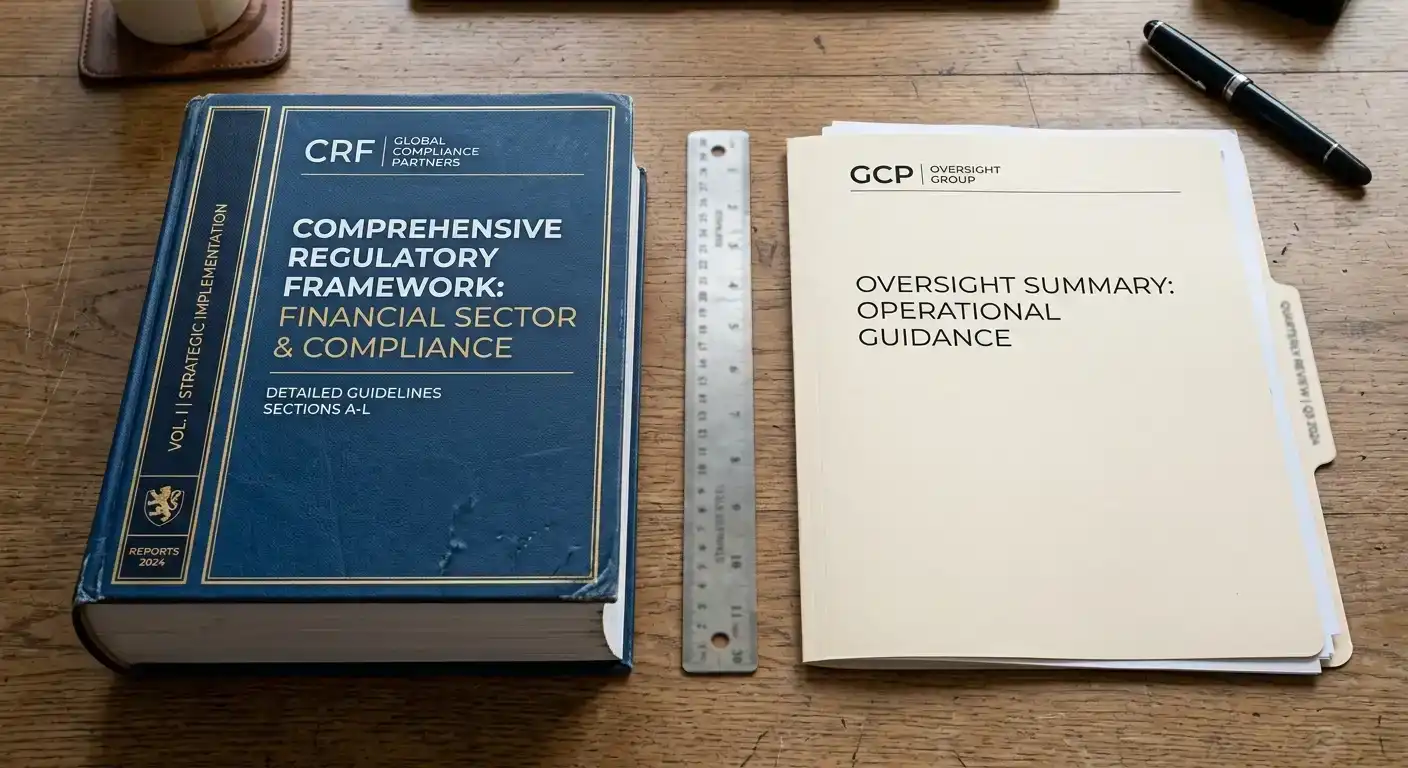
Player fund protection diverges sharply as well. UKGC licence conditions require operators to segregate customer funds from operational funds, ensuring that player balances are available for withdrawal even if the operator becomes insolvent. The CGA’s requirements around fund segregation are less prescriptive, and enforcement mechanisms are less established. For a UK player, this is perhaps the most consequential difference: if a Curaçao-licensed operator goes offline, the likelihood of recovering deposited funds is substantially lower than with a UKGC-licensed operator.
The enforcement track record underscores the scale of the difference. Andrew Rhodes, during his tenure as CEO of the UK Gambling Commission, spoke of strengthening regulation, improving consumer protections, and ensuring gambling is safer and fairer — and the Commission backed those words with action. The UKGC received £26 million in dedicated funding over three years specifically for combating unlicensed gambling. Between April and December 2025, the Commission issued 592 cessation orders, submitted roughly 328,000 URLs for removal from search engines, and achieved the closure or geo-blocking of 627 sites. Over the full 2025-26 financial year, 741 cease-and-desist orders were issued to operators and advertisers of unlicensed gambling. The CGA has no comparable enforcement track record to date.

None of this means Curaçao-licensed casinos are inherently fraudulent. Many operate honestly and pay out winnings without issue. But the safety net beneath the player — the regulatory infrastructure that catches problems before they become catastrophic — is thinner, and acknowledging that difference is essential to making an informed decision.
What the Licence Gap Means for UK Players in Practice
So what does all of this mean in practice if you are a UK player with money at Britsino? Let me strip away the regulatory jargon and describe the concrete scenarios.
If Britsino delays or refuses a withdrawal, you cannot escalate to the UKGC. The Commission’s remit covers only operators holding a UKGC licence, and Britsino does not hold one. You cannot file a complaint with IBAS or any other UKGC-approved ADR body for the same reason. Your options are: the operator’s own customer support, the CGA (if the operator holds a valid CGA licence), and general consumer law in the jurisdiction where the operator is incorporated. Each of those options is slower, less accessible, and less likely to produce a favourable outcome than the UKGC pathway available at licensed operators.
If Britsino’s terms and conditions include a clause granting the operator broad discretion to confiscate winnings or close accounts — and many offshore operators include exactly such clauses — there is no regulator with established jurisdiction to challenge that discretion. The CGA may develop this capability over time, but it does not have it now in any meaningful, battle-tested form.
If Britsino ceases operations entirely, player funds that are not segregated become part of the general estate in insolvency proceedings. Recovery in such cases is rare, time-consuming, and typically involves legal proceedings in a foreign jurisdiction. The practical outcome for most individual players is a total loss of their balance.
The Gambling Commission issued 741 cease-and-desist orders against unlicensed operators in the 2025-26 financial year. Andrew Rhodes emphasised that respectable regulators worldwide share the goal of stopping illegal gambling and are collaborating to achieve it. For UK players, that enforcement activity means the landscape of accessible offshore operators is actively shrinking — sites that are reachable today may not be tomorrow, and any balance held at a blocked site becomes inaccessible.
I want to be precise about what I am saying here. Playing at Britsino is not illegal for a UK resident. UK gambling law targets the operator, not the player. But the absence of UKGC licensing means the player operates without the consumer protections that UK regulation was specifically designed to provide. Whether that trade-off is acceptable depends on the individual, but it should be a conscious, informed decision — not a default one made because the bonus sounded good.

Casino.Guru Safety Index: What 6.4 out of 10 Actually Tells You
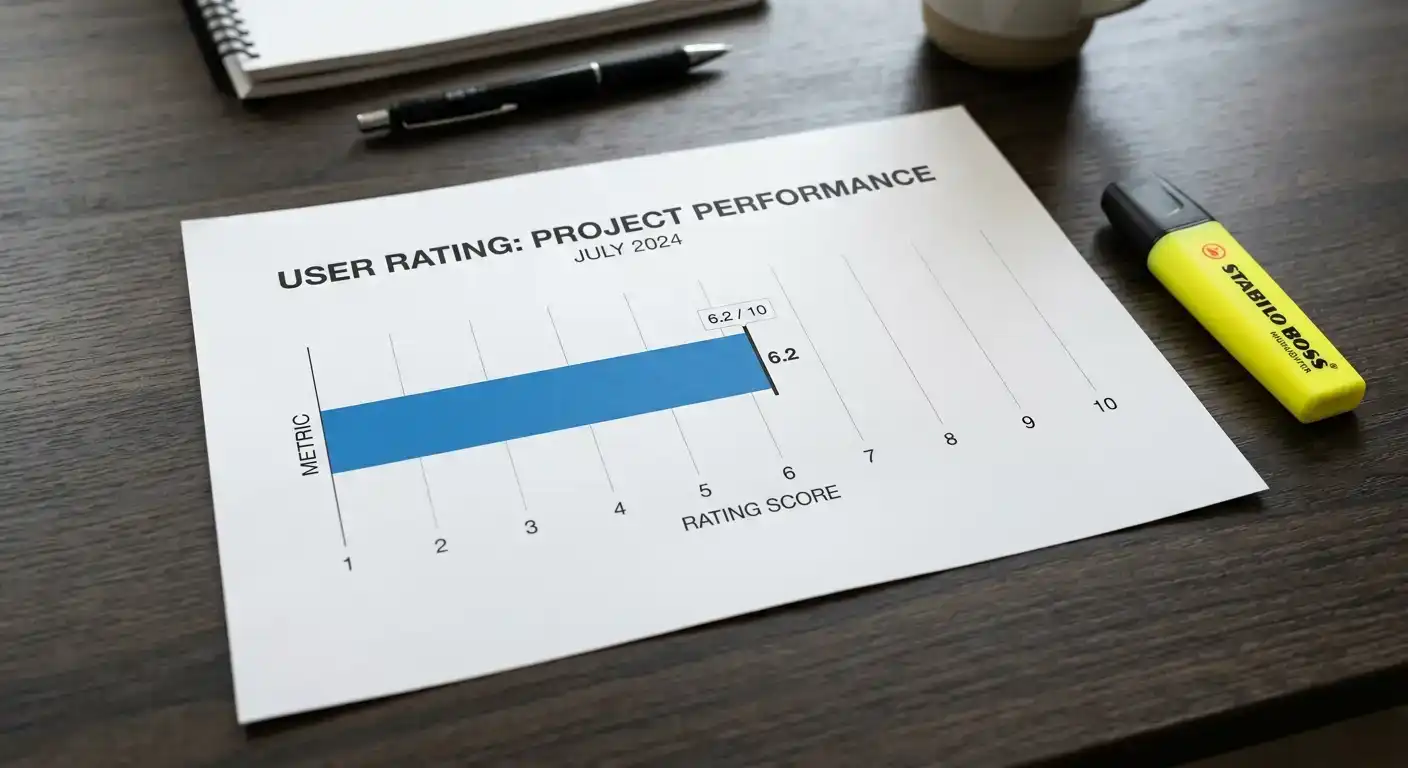
Numbers have a way of making subjective assessments feel objective, and the Casino.Guru Safety Index is a case study in both the power and the limitations of that effect. Britsino currently holds a Safety Index of 6.4 out of 10 (retrieved June 2026), which Casino.Guru classifies as Below Average. That score deserves unpacking. The metric is dynamic and updated continuously as new complaints and T&Cs reviews are processed.
The Safety Index methodology evaluates operators across multiple dimensions: the presence and quality of a valid licence, the fairness and clarity of terms and conditions, the volume and nature of player complaints, the operator’s responsiveness to those complaints, and the overall transparency of business practices. Each dimension feeds into a composite score, with different weightings reflecting the relative importance Casino.Guru assigns to each factor.
A score of 6.4 places Britsino in a middle band — above operators with serious, documented misconduct (scores below 4) but below operators with robust licensing, clean complaint histories, and transparent terms (scores above 8). For context, most UKGC-licensed operators with established track records tend to score between 7.5 and 9.5. Most Curaçao-licensed operators cluster between 5.0 and 7.0, reflecting the generally weaker regulatory oversight associated with the jurisdiction.
The most actionable components of the score for a prospective player are the complaint analysis and the terms and conditions audit. Casino.Guru’s team reviews the operator’s T&C for clauses that industry auditors flag as problematic: overly broad confiscation rights, uncapped withdrawal processing times, vague or contradictory bonus terms, and unilateral modification clauses. Each problematic clause drags the score down. Britsino’s T&C have drawn criticism for several such provisions — an analysis I have documented in detail elsewhere.
Check out our guide on Britsino Casino Login: Account Access, Two-Factor Security, and Common Troubleshooting as well.
It is worth noting what the Safety Index does not measure. It does not assess RTP accuracy, game fairness at the software level, or the operator’s financial solvency. It does not predict whether a specific player will have a positive or negative experience. And it is maintained by a private entity with its own editorial standards, not by a regulator. The score is a useful starting point for comparative assessment, but treating it as a definitive safety verdict gives it more authority than it was designed to carry.
For UK players, the Safety Index is most valuable as a relative benchmark. If Britsino scores 6.4 and a UKGC-licensed alternative scores 8.5, the gap reflects real differences in regulatory backing, complaint resolution, and terms transparency. The score does not tell you whether to play — that is your decision — but it quantifies the distance between what you are choosing and what the regulated alternative offers.
I also recommend tracking the score over time. Casino.Guru updates its Safety Index as new complaints are filed and resolved, and as operators modify their terms. A rising score suggests improving practices. A declining score suggests the opposite. A static score on an operator that has been active for years may indicate that the evaluation has not been refreshed, which limits its usefulness. Checking the date of the most recent review on the Casino.Guru page gives you an idea of how current the assessment is.
Can I file a complaint against Britsino Casino with the UK Gambling Commission?
No. The UK Gambling Commission only has jurisdiction over operators holding a UKGC licence. Since Britsino does not hold one, complaints must be directed to the operator’s own support team or, if the operator holds a valid Curaçao Gaming Authority licence, to the CGA. There is no UKGC-approved ADR pathway available for disputes with Britsino.
Does the Curaçao CGA reform make Britsino’s licence more trustworthy?
The CGA reform raises the regulatory bar by eliminating the master-licence intermediary system and requiring operators to apply directly for individual licences. However, the CGA is a new regulator without a tested enforcement track record. The reform improves the framework on paper but does not make a CGA licence equivalent to a UKGC licence in terms of consumer protection depth, dispute resolution infrastructure, or enforcement history.
Is my deposit money protected if Britsino Casino goes offline?
Curaçao-licensed operators are not subject to the same fund segregation requirements as UKGC-licensed operators. If Britsino ceases operations, player balances that are not ring-fenced from operational funds become part of the general estate in insolvency proceedings. Recovery is typically slow, uncertain, and may involve legal proceedings in a foreign jurisdiction.
How do I verify whether a casino’s Curaçao licence is genuine?
The Curaçao Gaming Authority maintains a public register of licensed operators. To verify a licence, locate the licence number displayed on the casino’s website — usually in the footer or the terms and conditions — and search for it on the CGA’s official register. If the licence number does not appear, or if the casino does not display a licence number at all, the claim is unsubstantiated.
Created by the ”Britsino Casino” editorial team.