Britsino Casino VIP Programme: Loyalty Tiers, Cashback Rates, and Tournament Access
 Available in GB
Every casino wants its players to stay longer, deposit more frequently, and feel rewarded for doing so. The VIP programme is the mechanism that accomplishes all three objectives simultaneously, and Britsino Casino’s loyalty structure is a textbook example of how gamification principles borrowed from mobile gaming have reshaped the online casino retention model.
I have audited loyalty programmes at offshore operators for years, and the pattern is consistent: the benefits scale with volume, the conditions are opaque until you reach a given tier, and the real value of each benefit is smaller than its presentation suggests. That is not cynicism — it is arithmetic. A cashback offer of “up to £200 per week” sounds generous until you calculate how much you need to lose to reach the cap.
This article breaks down Britsino’s VIP programme tier by tier: what each level requires, what it delivers, how the cashback formula actually works, and where the gamification elements — including the loot-box system — fit into the broader engagement strategy. The industry’s perception of AI’s importance in iGaming reached 8.41 out of 10 in 2025, up from 8.15 the previous year, and that shift is visible in how modern loyalty programmes personalise offers and track player behaviour. Whether those tools benefit the player as much as the operator is a question worth examining.
Discover everything about britsino casino here.
Loyalty Tiers: Requirements, Benefits, and Progression Speed
I remember the first time I mapped an operator’s VIP tier system on a whiteboard. The bottom tier was open to everyone. The top tier required wagering volumes that only a handful of players would ever reach. The middle tiers existed to create the illusion of proximity to the top — close enough to feel achievable, far enough to sustain another month of deposits. Britsino’s tier structure follows this architecture.
The loyalty programme operates on a points-based system. Every real-money wager generates loyalty points, typically at a rate tied to the amount staked. Slots usually generate points at a higher rate per pound wagered than table games, which mirrors the game weighting differential seen in bonus wagering requirements. As points accumulate, the player progresses through ascending tiers, each unlocking incremental benefits: higher cashback percentages, faster withdrawal processing, access to exclusive promotions, and in some cases a dedicated account manager at the highest levels.
The entry-level tier is automatic — any registered player with a deposit qualifies. The benefits at this level are minimal: basic cashback at the lowest percentage, standard withdrawal limits, and access to the general promotional calendar. Moving to the second and third tiers requires sustained play over weeks or months, depending on wagering volume. The intermediate tiers improve cashback rates modestly and may unlock tournament eligibility or slightly higher withdrawal limits.
The upper tiers are where the benefits become materially different. Higher cashback percentages, priority customer support, faster verification and withdrawal processing, invitations to exclusive tournaments with larger prize pools, and personalised bonus offers tailored to the player’s history. The cost of reaching these tiers — measured in total wagered amount — is substantial. A player wagering £500 per week on slots might take several months to reach the mid-range tiers. Reaching the top tier typically requires wagering volumes that only high-frequency or high-stake players sustain.

The progression speed is the critical variable that most loyalty programme descriptions gloss over. A player who wagers £100 per week and a player who wagers £5,000 per week are in the same programme but on radically different trajectories. The programme is designed to reward volume, and the benefit gap between tiers creates an incentive to increase wagering in pursuit of the next level. This is intentional. The operator wants higher-volume play, and the tier structure provides a psychologically compelling framework for encouraging it.
What operators rarely disclose is the tier maintenance requirement. At many casinos, including some Curaçao-licensed operators, VIP status is not permanent. If a player’s wagering volume drops below the threshold for their current tier during a review period, they can be demoted. The benefits they were receiving — higher cashback, better limits — are withdrawn. This creates a “treadmill” dynamic where maintaining status requires ongoing play at a consistent volume, not just a one-time achievement.
The psychological design of tier progression is worth pausing on. Each tier is typically named or branded to create aspiration — think “Silver,” “Gold,” “Platinum,” “Diamond.” The naming convention borrows directly from airline and hotel loyalty programmes, where similar tier labels have been proven to drive consumer behaviour. The difference is that a frequent flyer accumulates miles through travel they would likely do anyway, while a casino VIP accumulates points through wagering where the house has a mathematical edge on every transaction. The progression feels analogous, but the underlying economics are fundamentally different.
Over 56% of iGaming companies surveyed in 2025 ranked AI integration as a top-three business priority, and loyalty programmes are one of the primary areas where that integration manifests. AI-driven personalisation allows operators to tailor promotion timing, bonus amounts, and tier thresholds to individual player behaviour. From the operator’s perspective, this improves retention efficiency. From the player’s perspective, it means the offers you receive are calibrated to your specific spending patterns — which can be helpful or manipulative depending on implementation.

Comp Point Economics: What Your Wagering Actually Earns
Let me run some numbers, because this is where the marketing narrative meets arithmetic. Suppose Britsino’s loyalty programme awards one comp point for every ten pounds wagered on slots, and the conversion rate at your current tier is one thousand points per one pound of bonus credit.
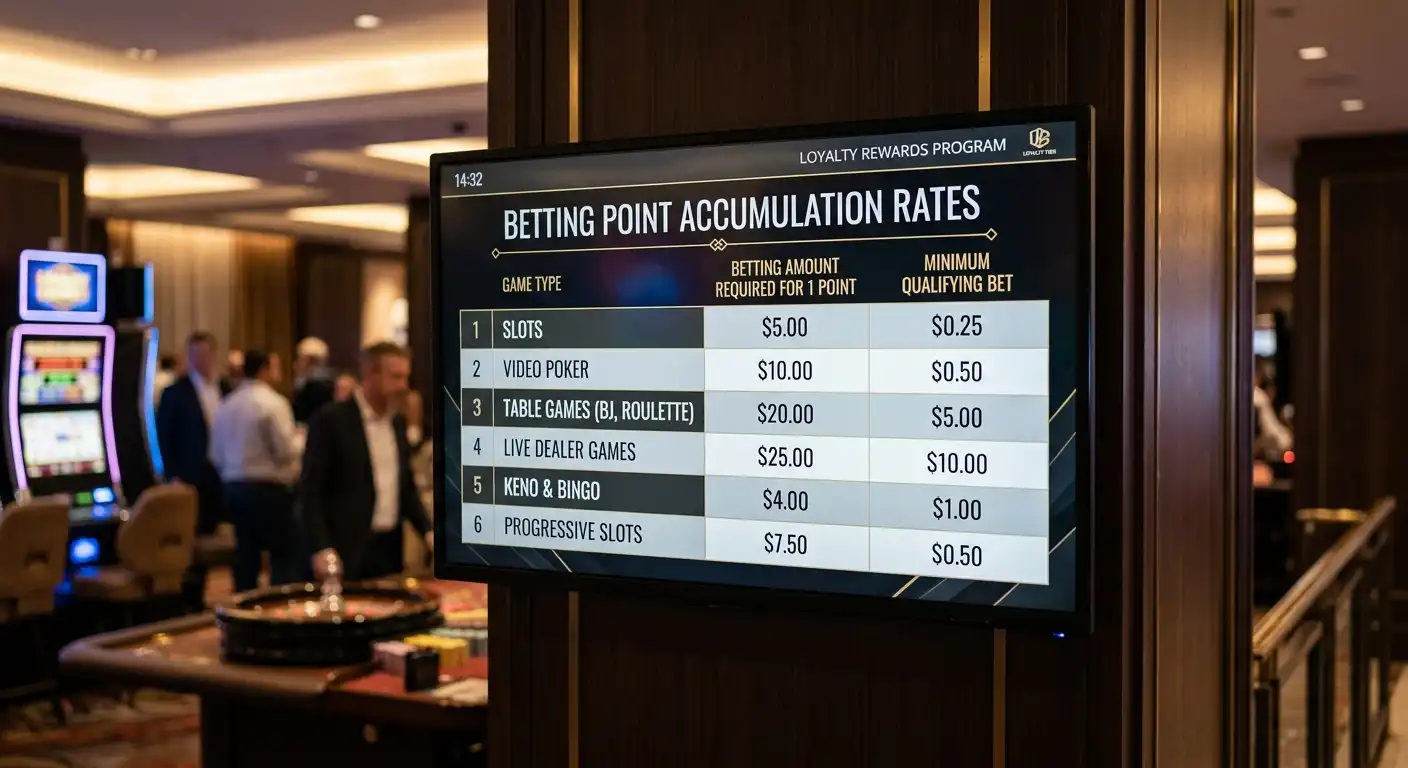
To accumulate one thousand points, you need to wager ten thousand pounds. At an average slot RTP of 96 per cent, the expected cost of that wagering volume is four hundred pounds in losses. You receive one pound in bonus credit for every four hundred pounds in expected losses. That bonus credit is itself subject to wagering requirements before conversion to withdrawable cash — say, x40 — which means you need to wager another forty pounds, costing you an additional one pound sixty at 96 per cent RTP. Your one pound of loyalty reward has a net expected value of roughly negative sixty pence.
Higher tiers improve the ratio but do not fundamentally change the economics. If the top tier doubles the conversion rate — five hundred points per one pound — you still need to wager five thousand pounds (expected cost: two hundred pounds) to generate one pound of bonus credit. The loyalty programme is a rebate mechanism, not a profit centre, and the rebate rate is a fraction of a per cent even under the most generous tier conditions.
This does not mean the programme is worthless. If you are going to wager at Britsino regardless, the loyalty points represent marginal value that would otherwise not exist. The mistake is treating the programme as a reason to wager more than you otherwise would. The incremental cost of chasing the next tier almost always exceeds the incremental benefit of reaching it.
Cashback Up to £200 per Week: Calculation and Fine Print
Cashback is the benefit that VIP programmes use as their centrepiece, and it is also the one most frequently misunderstood. “Up to £200 per week” is a ceiling, not a standard — reaching that cap requires losing a significant amount in a single week, and the percentage returned varies by tier.
The formula at most operators, Britsino included, calculates cashback as a percentage of net losses over a defined period. Net losses equal total deposits minus total withdrawals minus remaining account balance during the qualifying window. If you deposited £1,000, withdrew £200, and have £100 left in your account, your net loss for the period is £700. If your tier entitles you to 10% cashback, you receive £70.
That £70 brings up the next question: is it credited as real money or as bonus funds? This distinction determines whether the cashback is immediately withdrawable or subject to another round of wagering requirements. If cashback is credited as bonus funds at x40 wagering, the £70 requires £2,800 in additional wagers before it converts to cash. The expected cost of clearing £2,800 in wagers at 96% RTP is roughly £112 — which exceeds the cashback itself. In that scenario, the cashback has negative expected value. If credited as real money with no wagering, the £70 is genuinely £70. The difference between these two models is the difference between a real benefit and a marketing metric.
The £200 weekly cap also sets a boundary on the programme’s value for high-volume players. A player losing £5,000 in a week at a 10% cashback rate would expect £500 — but the cap limits the return to £200. For players operating at that scale, the effective cashback rate drops to 4%. The cap protects the operator’s exposure while maintaining the optics of a generous percentage. This is standard industry practice, not unique to Britsino, but it is worth understanding before factoring cashback into bankroll expectations.

Timing matters as well. Cashback at Britsino is typically calculated on a weekly cycle. Losses from Monday to Sunday (or whatever the operator’s defined week is) are tallied, the cashback percentage is applied, and the credit appears at the start of the following week. If you have a losing week followed by a winning week, the cashback from week one does not offset the gains of week two — each period is calculated independently. The system captures your worst weeks and ignores your best ones, which is mathematically favourable to the operator.
There is a subtlety here that experienced players understand but newcomers often miss: cashback does not reduce the house edge. It reduces the effective cost of play by returning a portion of losses, but the underlying probability of each spin or hand remains unchanged. A 96% RTP slot with 10% cashback does not become a 96.4% RTP slot. The cashback is applied after the fact, to the aggregate result, not to individual outcomes. Thinking of cashback as a discount on losses — rather than an improvement in odds — produces more accurate expectations.
For players who treat gambling as entertainment with a defined budget, cashback modestly extends the value of that budget. For players who increase their wagering volume specifically to maximise cashback, the additional losses typically outweigh the cashback received. The maths here are simple: if you increase weekly wagering by £500 to gain an extra £15 in cashback (at 10% of expected net losses at 96% RTP), you have spent an expected £20 in house edge to earn £15 back. The net result is worse, not better.
Tournaments at Britsino: Format, Prizes, and Entry Conditions
When I first encountered casino tournaments at an offshore operator, I assumed they were simple leaderboard competitions. Wager the most, win the most. The reality turned out to be more varied and more interesting than that — and also more carefully designed to drive exactly the behaviour the operator wants.
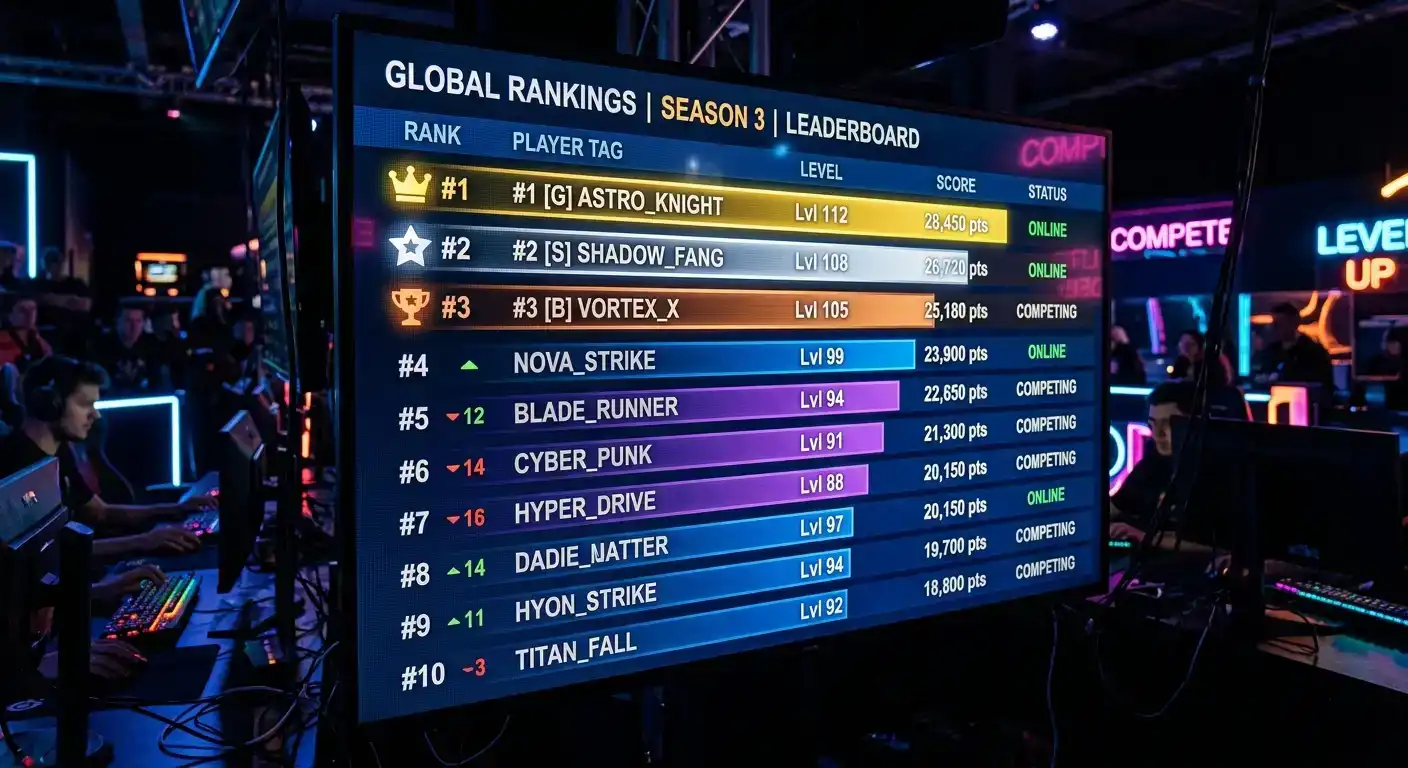
Britsino runs multiple tournament formats. The most common is a points-based leaderboard where players earn tournament points by wagering on eligible games during a defined period. Points accumulation is usually proportional to the amount wagered, meaning higher-stake players climb the leaderboard faster. The prize pool is distributed across the top positions — first place takes the largest share, with diminishing prizes down the rankings. The number of winning positions and the prize distribution curve vary by tournament.
Prize drop tournaments operate differently. Instead of a leaderboard, prizes are awarded randomly to players who are actively wagering on eligible games during the tournament window. Any qualifying spin can trigger a prize drop, regardless of the spin’s outcome. This format is less predictable than leaderboard competitions and does not disproportionately favour high-stake players, making it more accessible to lower-volume participants.
Entry requirements are the hidden variable. Some tournaments are open to all registered players. Others require a minimum wager to activate participation or are restricted to specific VIP tiers. Tournament prizes may be credited as real money, as bonus funds subject to wagering, or as a combination of both. The average number of active online gambling accounts in the UK sat at 13.4 million in Q1 2026 — a slight decline from the previous year — but tournament participation rates within any single operator are a fraction of the total player base. The competition within a Britsino tournament is smaller than the headline player count might suggest, which can work in a participant’s favour on smaller-scale events.
Whether tournaments represent good value depends on the entry cost (implicit in the wagering required to compete), the prize pool size, the number of participants, and the prize distribution structure. A tournament requiring £1,000 in wagers to be competitive, with a £500 first prize and 200 participants, has an expected return that most players will find negative after accounting for the house edge on their tournament wagers. The entertainment value of competition adds a non-monetary dimension, but the financial calculus should not be ignored.
A practical approach to tournaments is to participate when the eligible games and stake levels align with what you would be playing anyway. If a tournament runs on slots you already enjoy at stakes within your budget, the tournament layer adds potential upside to activity you were going to undertake regardless. If participating requires you to play different games, at different stakes, or for longer sessions than planned, the tournament cost is coming out of your bankroll whether you win a prize or not.
Britsino promotes tournaments with varying frequency — some run daily, others weekly, and seasonal events appear around holidays or promotional campaigns. The tournament schedule is typically visible in the promotions section of the site, though the specific terms (eligible games, minimum qualifying wagers, prize distribution) are only available in the individual tournament rules. Checking those rules before participating is essential, because the headline prize amount does not tell you the expected value of participation. A £10,000 prize pool split across 500 positions is very different from the same pool split across 10.
The Real Cost of Tournament Participation
Every tournament has an implicit cost even if the entry is free. The spins you make during a tournament carry the same house edge as any other session — the tournament overlay does not change the RTP of the underlying games. If you play 500 spins at £0.50 during a tournament on a 96 per cent RTP slot, your expected loss is £10, regardless of whether you finish first or last on the leaderboard. The tournament prize is an additional layer on top of that baseline cost, not a replacement for it.
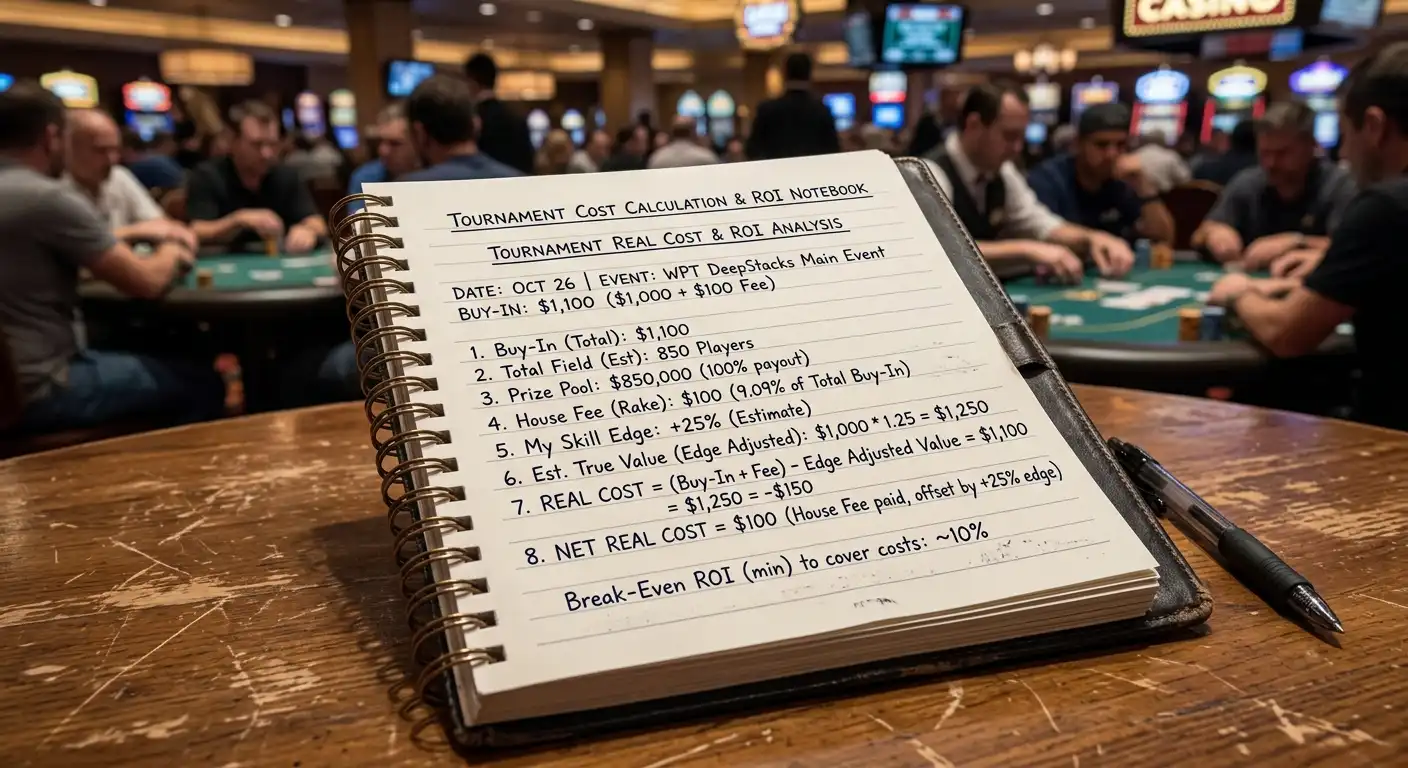
For most recreational players, tournaments are a format shift rather than an economic opportunity. They add structure, competition, and time pressure to a session that would otherwise be open-ended. The players who extract consistent value from tournaments are those whose natural volume and stake level already place them in the upper quartile of leaderboard contenders — they are not adjusting their play to fit the tournament; the tournament is a bonus on top of play they would have done regardless. If entering a tournament requires you to increase your stakes, extend your session beyond your comfort zone, or chase a leaderboard position with money you cannot afford to lose, the tournament is costing you more than the prize pool can return.
Do Britsino Casino tournaments have entry fees?
Tournament entry conditions vary. Some Britsino tournaments offer free entry, while others require a minimum deposit, a buy-in, or a minimum bet size per spin. The specific requirements are published in each tournament’s promotional terms before the event begins. Free-entry tournaments typically have smaller prize pools.
Are Britsino tournament prizes paid as withdrawable cash?
Tournament prizes at Britsino may be credited as bonus funds subject to wagering requirements rather than as withdrawable cash. The wagering multiplier and any withdrawal caps are specified in the tournament terms. Check these conditions before entering to understand the effective value of the prize pool.
Tournament Game Selection and Strategic Considerations
During a tournament at a competing operator last year, I deliberately chose a high-volatility slot because the scoring model rewarded win-to-bet ratio. My strategy worked for three days, then another player hit a 5,000x multiplier on day four and rendered my entire week irrelevant. Tournaments add a competitive layer to what is fundamentally a luck-driven activity, and the strategic space is narrower than it appears.

Britsino tournaments are typically restricted to specific slot titles or a defined category of games. You cannot enter a slot tournament and accumulate points on live blackjack — the eligible games are listed in the tournament terms. Within the eligible pool, game selection matters primarily in relation to the scoring model. If the tournament scores on win-to-bet ratio, high-volatility slots with large maximum multipliers give you the best theoretical chance of a leaderboard spike. If the tournament scores on absolute win amounts, a lower-volatility slot played at higher stakes produces more consistent point accumulation.
The SOFTSWISS iGaming trends report rated the perceived importance of AI-driven personalisation at 8.41 out of 10 in industry surveys, and tournament matching — pairing players of similar volume or experience levels — is one area where that technology is beginning to appear. At Britsino, tournaments are currently open to all eligible players without skill-based or volume-based tiering, which means a recreational player with a £50 bankroll competes on the same leaderboard as a high-roller wagering thousands per session.
Bet sizing within tournaments requires a trade-off. Higher bets generate more points per win but burn through your bankroll faster, potentially ending your tournament participation before the window closes. Lower bets conserve bankroll but produce smaller point contributions per winning spin. The optimal approach depends on the tournament duration, your total budget, and the scoring model — and there is no universal formula because the variance in slot outcomes dominates any strategic edge. The volatility mechanics I covered separately apply directly to tournament game selection.
Loot Boxes and Gamification: How Britsino Keeps Players Engaged
Loot boxes in an online casino operate on the same psychological principles as loot boxes in video games: the anticipation of a random reward triggers dopamine release regardless of the reward’s actual value. Britsino incorporates a loot-box mechanic as part of its gamification layer, offering players randomised rewards — bonus credits, free spins, cashback boosts, or cosmetic account upgrades — triggered by wagering milestones or other engagement criteria.
The design is effective because it adds a secondary reward loop on top of the primary one (the slot or table game itself). A player is no longer just playing for the game’s outcome — they are also playing toward the next loot box, the next tier, the next milestone. Each layer of gamification extends session duration and encourages higher wagering volume by making the player feel that stopping before the next threshold would be a missed opportunity.

Emilia Kurzynska, Deputy Team Lead Anti-Fraud at SOFTSWISS, has noted that AI is central to the future of responsible gambling, making player protection more precise by detecting harmful patterns early while also helping operators meet regulatory standards. That observation cuts both ways in the context of gamification. AI can personalise responsible gambling interventions — identifying players showing early signs of problem behaviour and triggering cooling-off prompts or deposit limit suggestions. But AI also powers the personalisation of gamification elements themselves, tuning the timing and size of loot-box rewards to maximise engagement for each individual player.
The ethical tension is real and largely unresolved in the industry. Gamification mechanics borrow from behavioural psychology — variable ratio reinforcement schedules, loss aversion framing, near-miss effects — techniques that are well understood to sustain engagement but that also overlap with the mechanisms that drive compulsive behaviour. UKGC-licensed operators face scrutiny over these mechanics and are required to demonstrate that their gamification features do not exploit vulnerable players. Curaçao-licensed operators face no equivalent oversight, which means the implementation of loot boxes and similar mechanics is governed by the operator’s own ethical standards rather than by regulatory mandate.
For the player, the practical takeaway is this: gamification features are designed to keep you playing longer and wagering more. That is their purpose. If the loot-box timer or the tier-progress bar is influencing your decision to deposit again or extend a session beyond your intended time, the mechanic is working exactly as designed — and it is working for the operator’s benefit, not yours. Awareness of the design intent is the first step toward making autonomous decisions about your own play patterns.

None of this means gamification is inherently harmful. For players who set firm boundaries on their time and money, the additional engagement layers can make the experience more entertaining without increasing risk. The danger arises when the gamification becomes the primary motivator for play, overriding the player’s original budget and time limits. The bonus guide covers how to separate entertainment budgets from wagering targets — the same principle applies to gamification rewards.
A useful self-test: before each session, note why you are logging in. If the answer is “I want to play a specific game for a set amount of time,” the motivation is entertainment-driven. If the answer is “I am 200 points away from the next tier” or “My loot box is almost ready to open,” the gamification layer has shifted from a feature to a driver. Recognising that shift is the difference between using the programme and being used by it. The mechanics are designed by professionals who understand behavioural incentives at a granular level. Matching that sophistication with self-awareness is the player’s responsibility, and it is one that no VIP programme will encourage you to exercise.
Check out our guide on Britsino Casino Wagering Requirements: x40 Playthrough Explained With Worked Examples as well.
How quickly can I reach the highest VIP tier at Britsino Casino?
Progression speed depends entirely on wagering volume. A player wagering several thousand pounds per week could reach the upper tiers within a few months. A player wagering £100 per week might take a year or longer. The programme is designed to reward sustained high-volume play, and there are no shortcuts or purchases that bypass the wagering-based progression.
Is Britsino Casino cashback paid as real money or bonus funds?
The crediting method is specified in the bonus terms and may vary by promotion or VIP tier. Cashback credited as real money is immediately withdrawable. Cashback credited as bonus funds is subject to wagering requirements before withdrawal. Check the current terms for your specific tier, as operators occasionally change the crediting model between promotional cycles.
How are Britsino Casino tournament prizes credited — as cash or bonus balance?
Tournament prize crediting varies by event. Some tournaments credit prizes as real money with no wagering attached. Others credit prizes as bonus funds subject to a playthrough requirement. The specific terms are stated in each tournament’s rules, which should be reviewed before participating. The crediting method significantly affects the real value of any prize won.
Can I lose my VIP status at Britsino if I stop playing?
Most tiered VIP programmes include a review period during which the player’s wagering activity is assessed. If activity falls below the threshold for the current tier, demotion is possible. The specific review period and demotion criteria are typically outlined in the loyalty programme terms. Reduced activity over an extended period may result in a return to the base tier, along with the loss of associated benefits like higher cashback rates and elevated withdrawal limits.
Published by the Britsino Casino team.