
Britsino Casino Table Games: Blackjack, Roulette, and Baccarat Variants Compared
 Available in GB
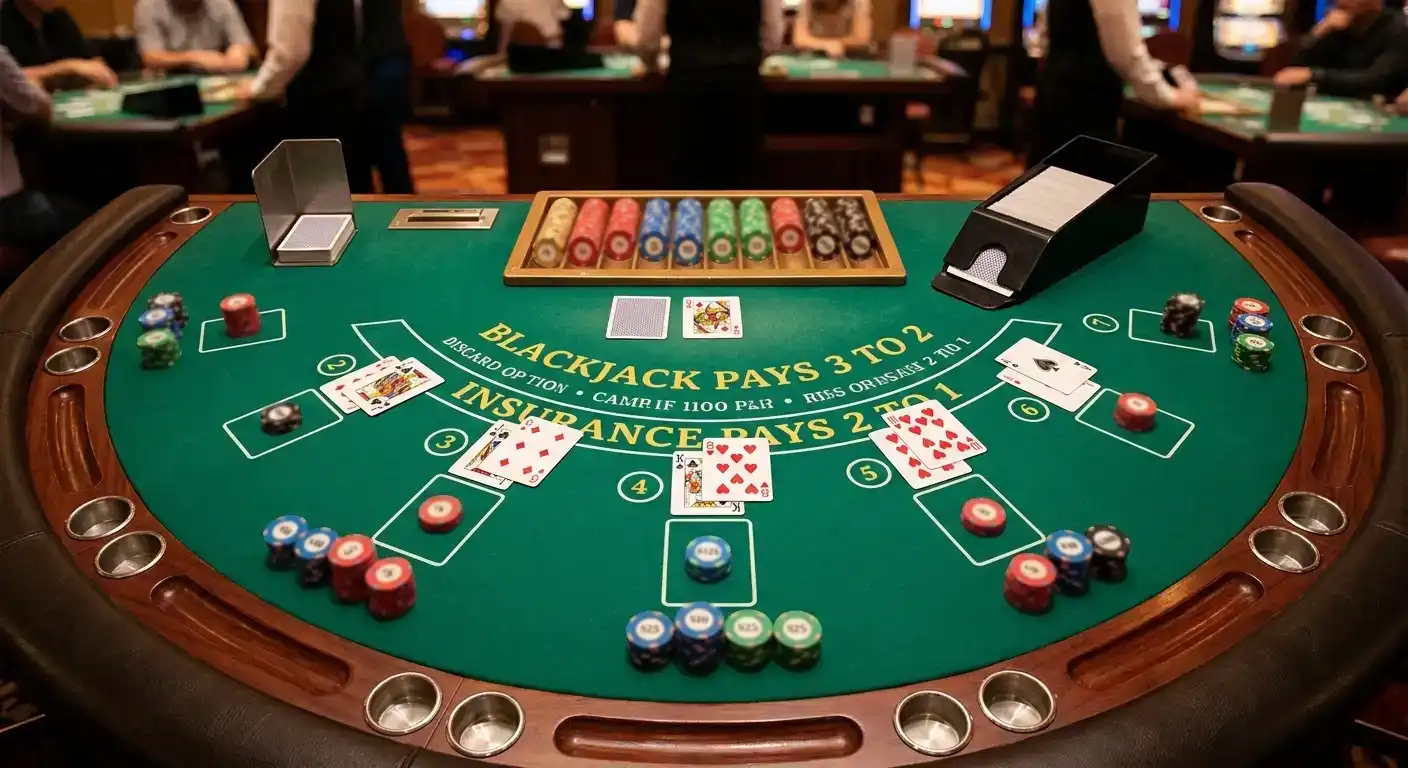
Table games are where the maths of casino gambling becomes transparent. Unlike slots, where the outcome of each spin is opaque without consulting the paytable and RTP documentation, table games operate on rules you can see and probabilities you can calculate. I have spent thousands of hours across blackjack, roulette, and baccarat tables — both physical and digital — and Britsino Casino’s table game selection, drawn from multiple providers, offers enough variety to satisfy players who care about the numbers behind the entertainment.
Blackjack Variants: Rules Differences That Change the House Edge
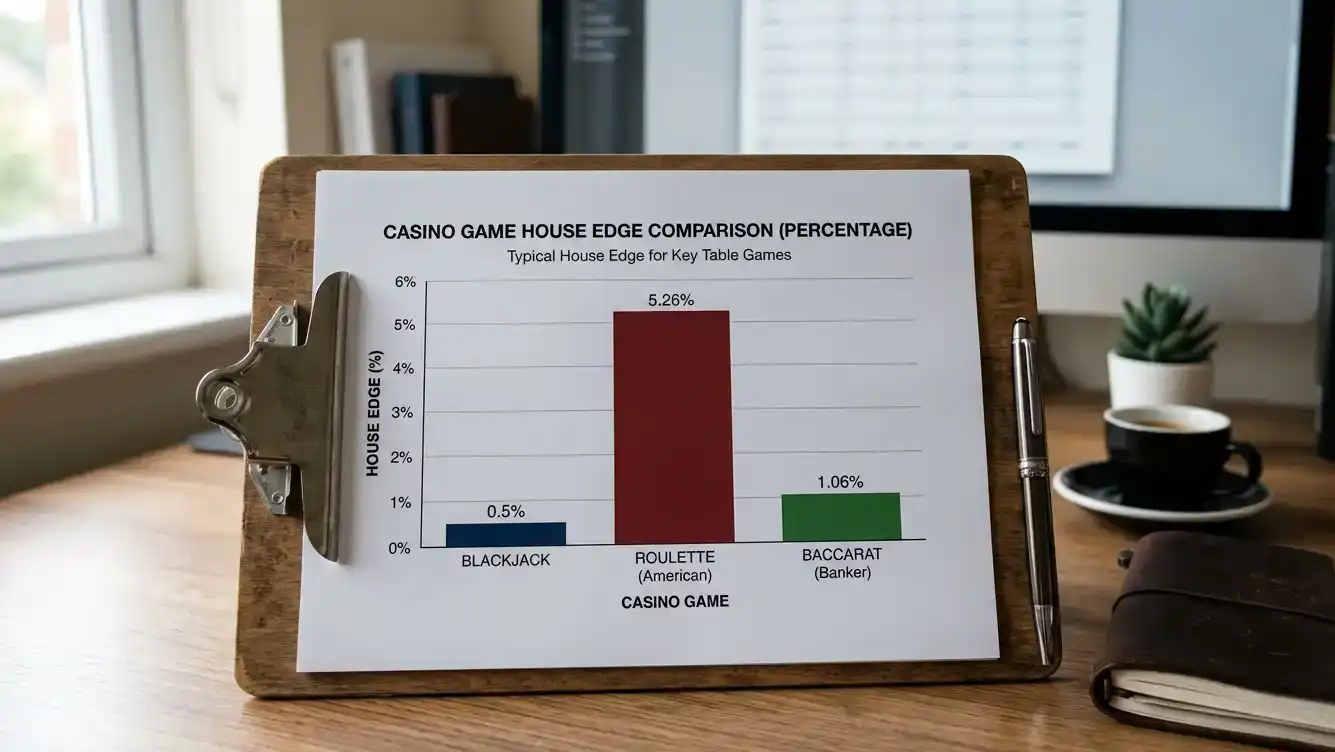
A colleague once asked me which casino game I would play if I could only pick one. Blackjack, without hesitation — not because it is the most exciting, but because it offers the lowest house edge of any standard casino game when played with basic strategy. The house edge on a well-ruled blackjack table sits between 0.4 and 0.8 per cent, compared to 2.7 per cent for single-zero roulette and roughly 1.06 per cent for banker bets in baccarat.
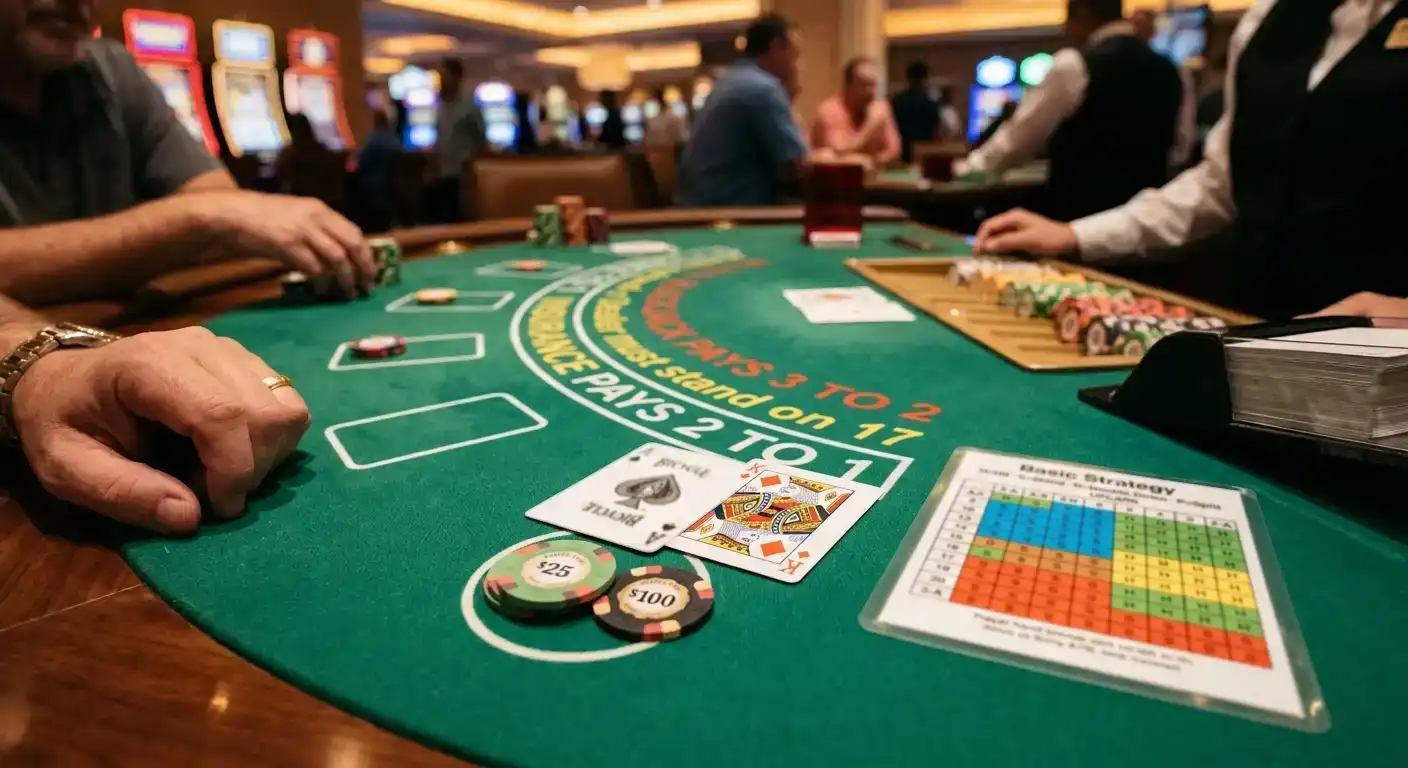
Britsino offers several blackjack variants through its RNG (software-dealt) table game section. Classic blackjack, European blackjack, and multi-hand variants are the core offerings. The rules differences between them — whether the dealer stands or hits on soft 17, whether doubling after splitting is permitted, the number of decks in play — shift the house edge by tenths of a percentage point. Those tenths matter over thousands of hands.
European blackjack, where the dealer does not take a hole card, carries a marginally higher house edge than American-style games because the player commits their full bet (including doubles and splits) before knowing whether the dealer has blackjack. Multi-hand variants let you play three or five hands simultaneously, which increases the speed of play and the volume of wagering per hour but does not change the mathematical edge on any individual hand. The RTP analysis I published separately covers how to verify the theoretical returns across game categories, including table games.
Roulette: European, American, and Speciality Wheels
When I teach people about casino maths, I start with roulette because the entire probability structure is visible on the wheel. European roulette has 37 pockets (0 through 36), giving the house a 2.7 per cent edge on every bet. American roulette adds a double-zero pocket, pushing the total to 38 and the house edge to 5.26 per cent. That extra pocket nearly doubles the operator’s advantage — a difference that makes American roulette one of the worst-value games in any casino.
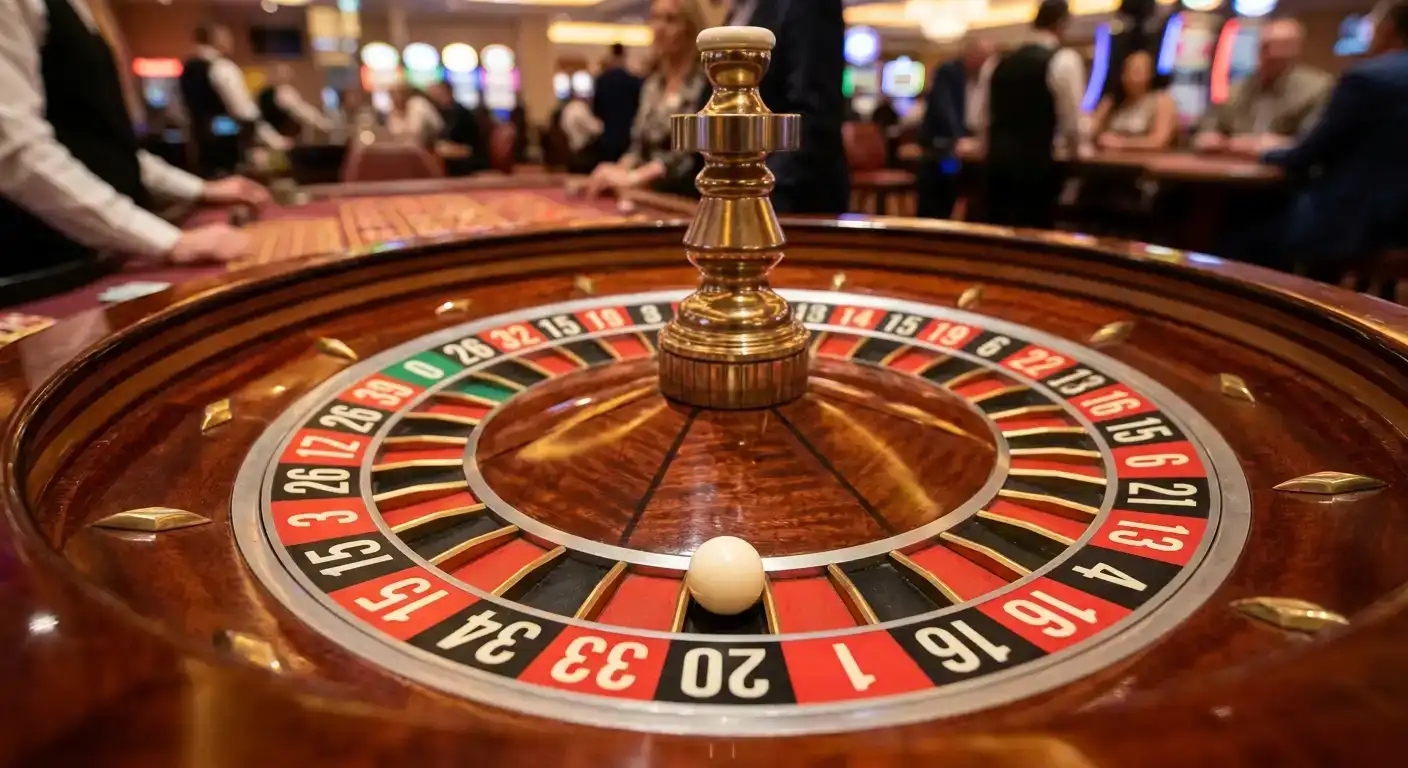
Britsino’s RNG roulette selection includes European and French variants. French roulette applies the “la partage” or “en prison” rules on even-money bets when the ball lands on zero, halving the house edge on those bets to 1.35 per cent. If French roulette is available and you primarily place even-money bets, it offers the best mathematical value of any roulette variant in the lobby.
Speciality variants — auto-roulette, mini-roulette, and multi-wheel formats — appear in the catalogue depending on provider availability. Mini-roulette uses a 13-pocket wheel (0 through 12), which simplifies the game but carries a significantly higher house edge due to the proportionally larger zero pocket. Multi-wheel roulette lets you bet on multiple independent wheels simultaneously, increasing throughput without changing the underlying probabilities. UK online casino GGY reached seven hundred and seventy-three million pounds quarterly in early 2026, and roulette remains one of the top three revenue-generating table game categories across the industry.
Baccarat: Why the Simplest Game Has the Most Confusing Reputation
Baccarat intimidates new players because of its association with high-roller rooms and its seemingly complex card-drawing rules. In reality, it is the simplest table game in any casino — you bet on Player, Banker, or Tie, and the cards are dealt according to a fixed protocol that requires no player decision-making. The house edge on the Banker bet is approximately 1.06 per cent (after accounting for the standard 5 per cent commission on Banker wins), and the Player bet carries a 1.24 per cent edge. The Tie bet, at roughly 14.4 per cent house edge, is one of the worst wagers available.

Britsino includes RNG baccarat variants alongside the live dealer baccarat tables covered in a separate analysis. The RNG versions are useful for players who want to learn the game’s flow without the time pressure of a live table, and they typically allow lower minimum bets. Punto banco is the standard variant, and it is functionally identical across providers — the fixed drawing rules leave no room for gameplay variation, so the difference between providers is purely cosmetic: card animation, table layout, and interface design.
One quirk of digital baccarat is the availability of side bets that do not exist in most physical casinos. Player Pair, Banker Pair, and Perfect Pair are common additions that pay higher multiples but carry house edges of 10 per cent or more. Side bets transform baccarat from one of the best-value table games into a high-edge proposition, and the temptation to add them to a main bet for excitement is exactly the behavioural lever that operators count on. Per the UK Gambling Commission’s Gambling Survey for Great Britain (Year 2, 2024), 48 per cent of UK adults gambled in the past four weeks, and for the segment that gravitates toward table games, understanding the edge differential between main bets and side bets is the most valuable piece of knowledge they can carry into any session.
RNG Fairness: How Software Table Games Generate Outcomes
Every software-dealt table game at Britsino runs on a random number generator — a mathematical algorithm that produces outcomes with no pattern or predictability. The RNG is the digital equivalent of a physical deck or a physical wheel, and its integrity depends on two things: the quality of the algorithm and the independence of the audit.

Tier-one providers like Pragmatic Play and BGaming submit their RNG implementations to independent testing laboratories such as iTech Labs, GLI, or BMM Testlabs. These labs run millions of simulated rounds to verify that the output distribution matches the expected mathematical probabilities. A certified RNG for European roulette, for example, should produce each number with a frequency of approximately 1/37 over a sufficiently large sample. Deviations beyond the statistical threshold indicate a problem with the algorithm.
The practical question for players is whether the RNG certification applies to the specific version of the game running at Britsino. Providers can configure different RTP settings for different operators, particularly in slots. For table games, the rules are fixed by the game variant rather than configurable, so the RTP is determined by the mathematics of the game itself. A European roulette game from any certified provider will carry a 2.7 per cent house edge because the rules dictate it — the provider cannot adjust this without changing the game’s fundamental structure.
Which table game at Britsino has the lowest house edge?
Blackjack played with basic strategy offers the lowest house edge, typically between 0.4 and 0.8 per cent depending on the specific rules variant. French roulette with la partage rules on even-money bets comes second at 1.35 per cent, followed by baccarat’s Banker bet at approximately 1.06 per cent.
Are Britsino’s RNG table games fair?
The software-dealt table games at Britsino run on random number generators supplied by their game providers. Tier-one providers submit their RNG implementations to independent testing laboratories for certification. For table games specifically, the house edge is determined by the game rules themselves rather than configurable settings, so a certified European roulette game will carry the same 2.7 per cent edge regardless of which operator hosts it.
Published by the Britsino Casino team.