Britsino Casino and Provably Fair Gaming: How Cryptographic Verification Works in Practice
 Available in GB
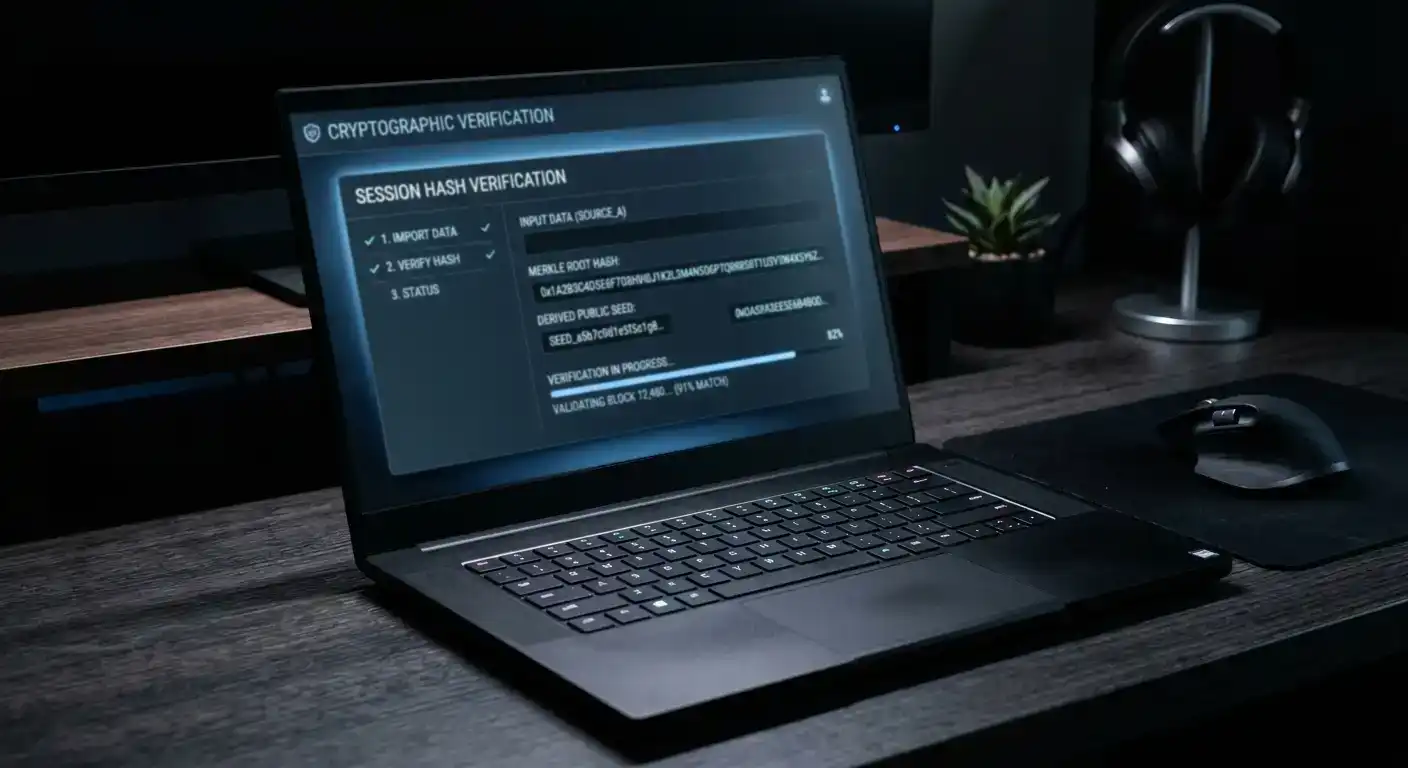
Provably fair is one of those terms that sounds like marketing but actually describes a verifiable technical process. I dismissed it as jargon the first time I encountered it in 2019 — and then I ran the verification on a session of 100 spins and realised it was the most meaningful transparency tool I had seen in a decade of reviewing online casinos. At Britsino Casino, provably fair technology is available on a subset of games, primarily from crypto-native providers like BGaming, and it gives players something that traditional RNG-certified slots cannot: the ability to independently confirm that a specific game outcome was not manipulated.
The Cryptographic Process: Seeds, Hashes, and Verification
When I explain provably fair to non-technical readers, I use the sealed envelope analogy. Before each round, the casino writes the outcome on a piece of paper and seals it in an envelope. You can see the envelope but not the contents. After the round plays out, the envelope is opened and you can verify that the outcome matches what was sealed before the round began. Cryptography replaces the physical envelope with a mathematical equivalent that is impossible to forge.
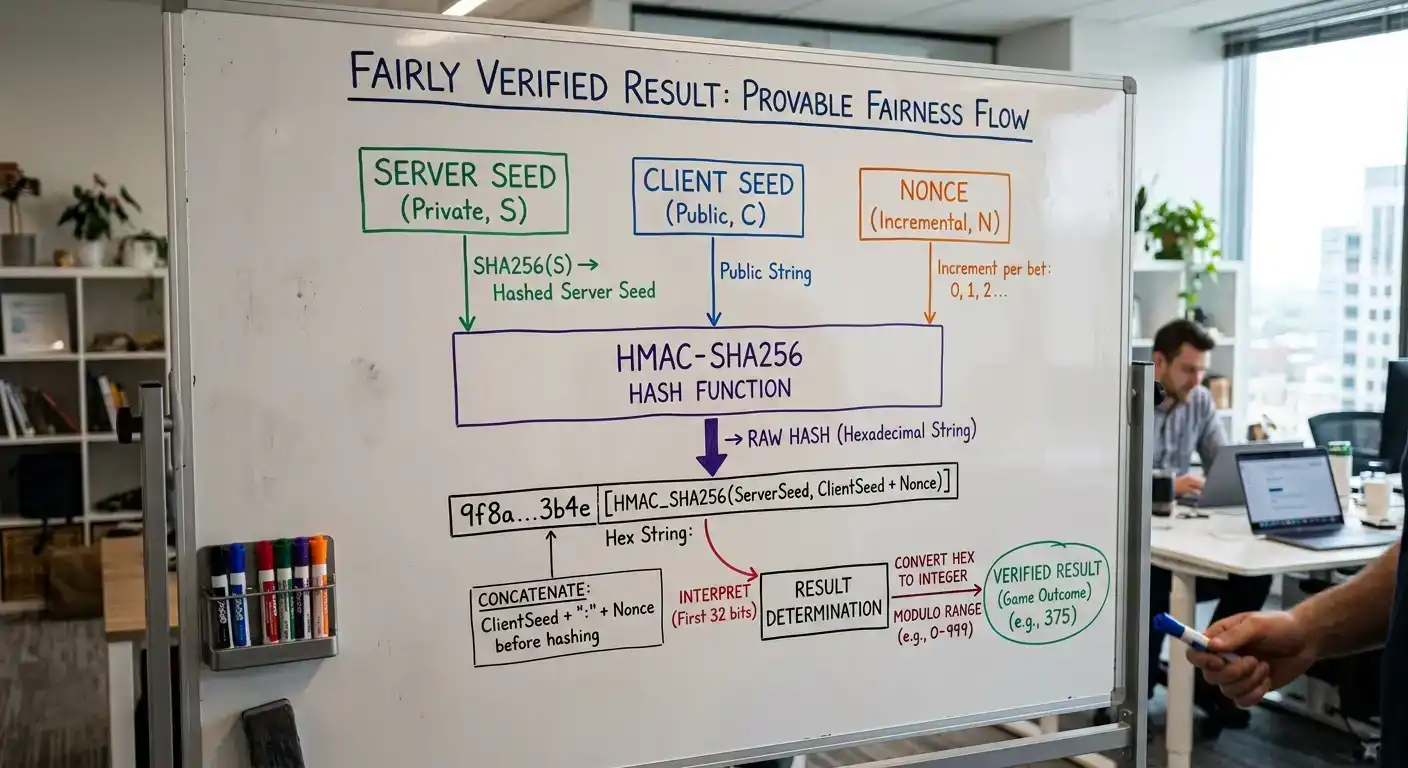
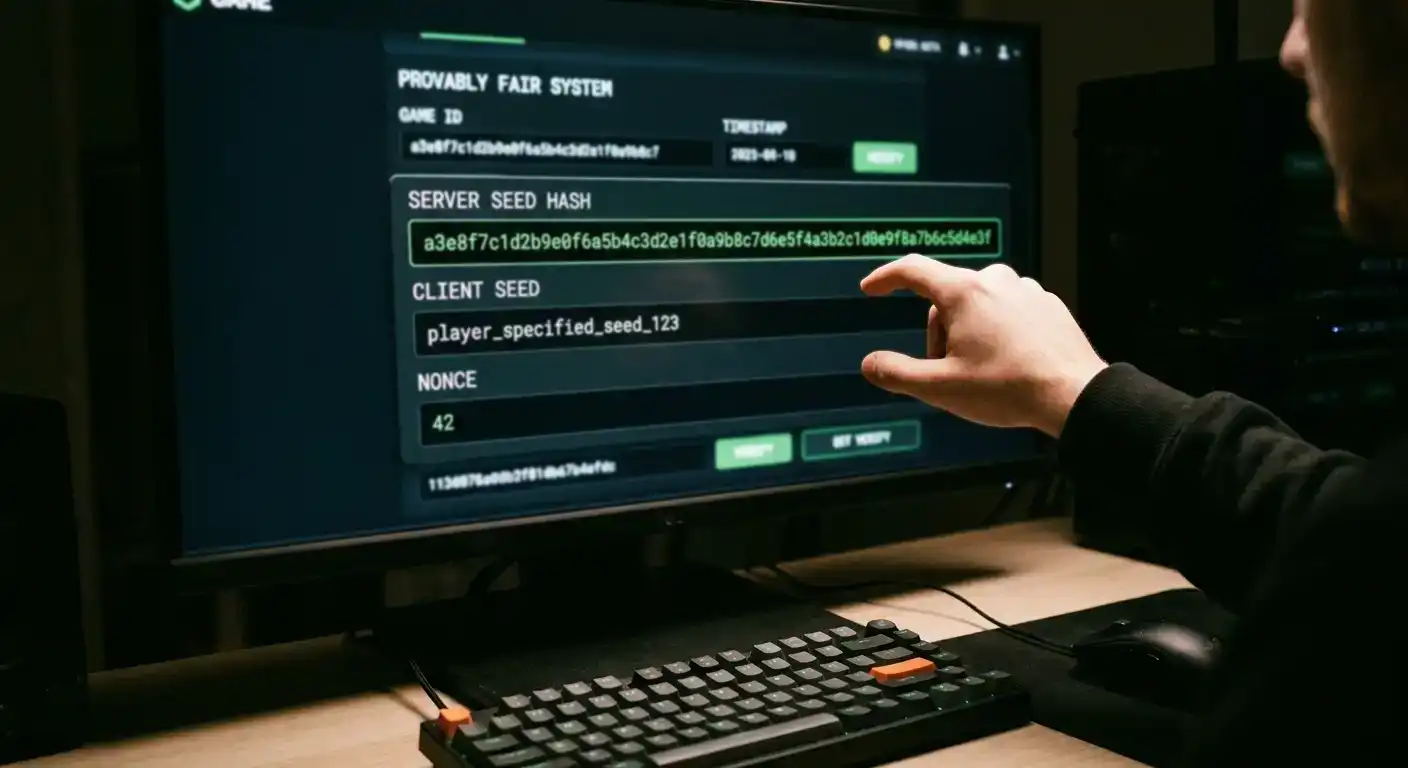
The technical process works through three elements: a server seed (generated by the casino), a client seed (generated by the player or their browser), and a nonce (a sequential counter that increments with each bet). Before a round begins, the casino publishes a hash of the server seed — a cryptographic fingerprint that uniquely identifies the seed without revealing it. This is the sealed envelope. After the round, the casino reveals the actual server seed, and the player can independently hash it to confirm it matches the pre-published fingerprint. They can also recalculate the game outcome using the server seed, client seed, and nonce to verify that the result they experienced matches the mathematically determined output.
The beauty of this system is that neither party can cheat. The casino cannot change the server seed after seeing the player’s input because the hash was already published. The player cannot predict the outcome because they do not know the server seed until after the round. The nonce prevents replay attacks by ensuring each round produces a unique result even if the seeds remain constant.
Which Britsino Games Support Provably Fair
Not every game at Britsino is provably fair — the technology is primarily implemented by crypto-native providers, and the traditional slot studios that make up the majority of the library use standard RNG certification instead. BGaming is the most prominent provably fair provider in Britsino’s catalogue, with a selection of slots and original games that support full cryptographic verification.
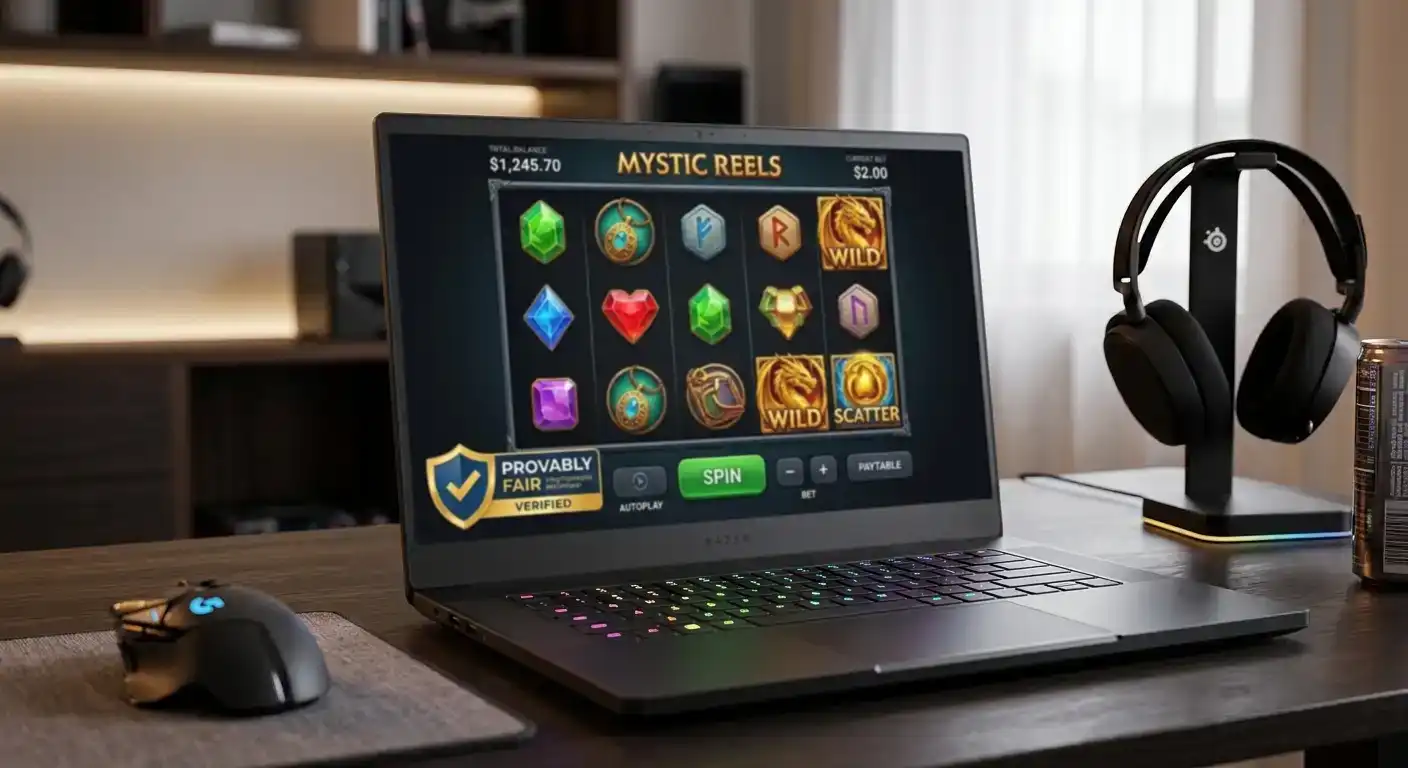
The distinction matters because it creates two tiers of transparency within the same casino. On a provably fair BGaming slot, you can verify every single spin. On a Pragmatic Play or Evolution game, you rely on the provider’s RNG certification from an independent testing laboratory — a valid assurance, but one you cannot replicate yourself. The crypto-gambling market is projected to exceed sixty-five billion dollars by 2026, and provably fair technology is one of the differentiators driving that growth among technically savvy players who value verifiability over trust.
To identify provably fair games in Britsino’s lobby, look for a verification icon or a “Provably Fair” label on the game’s info screen. Within the game interface, a settings or fairness menu should provide access to the current seed information, the hash of the server seed, and the tools to verify past results. If the game does not display these elements, it uses traditional RNG rather than cryptographic verification. The provider directory identifies which studios in Britsino’s library support provably fair technology.
Running a Verification: Step by Step
I run provably fair verification checks as part of every crypto-casino review, and the process takes about five minutes once you understand the workflow. Here is how to do it at Britsino on a BGaming title.

First, open the fairness or verification section within the game. Note the hashed server seed — this is the pre-commitment. Your client seed is displayed alongside it, and you can change it before the round if you want to influence the input. Play the round normally. After the result is displayed, return to the fairness section. The server seed for that round is now revealed. Copy the server seed, client seed, and nonce.
Next, use a third-party verification tool — BGaming and other provably fair providers typically offer one on their website, and independent tools are available from the crypto-gambling community. Paste in the three values and run the calculation. The tool will output the determined result, which should match exactly what you experienced in the game. If it matches, the round was fair. If it does not, you have cryptographic evidence of manipulation — something that has never been documented at a reputable provably fair provider, which is itself a testament to the system’s integrity.
The process is accessible to anyone comfortable with copying and pasting text fields. You do not need to understand the underlying cryptography to use the verification tool — you need only compare two values: the tool’s output and the result you saw on screen. Over 300 million people globally own cryptocurrency, and many of them bring a verification-first mindset to their casino activity that provably fair technology directly serves.
Provably Fair vs. Traditional RNG Certification: Complementary, Not Competitive
A common misconception is that provably fair makes traditional RNG certification obsolete. It does not. The two systems answer different questions. Provably fair lets you verify individual outcomes — was this specific spin manipulated? RNG certification verifies statistical fairness across millions of outcomes — does this game return 96 per cent to players over the long run?
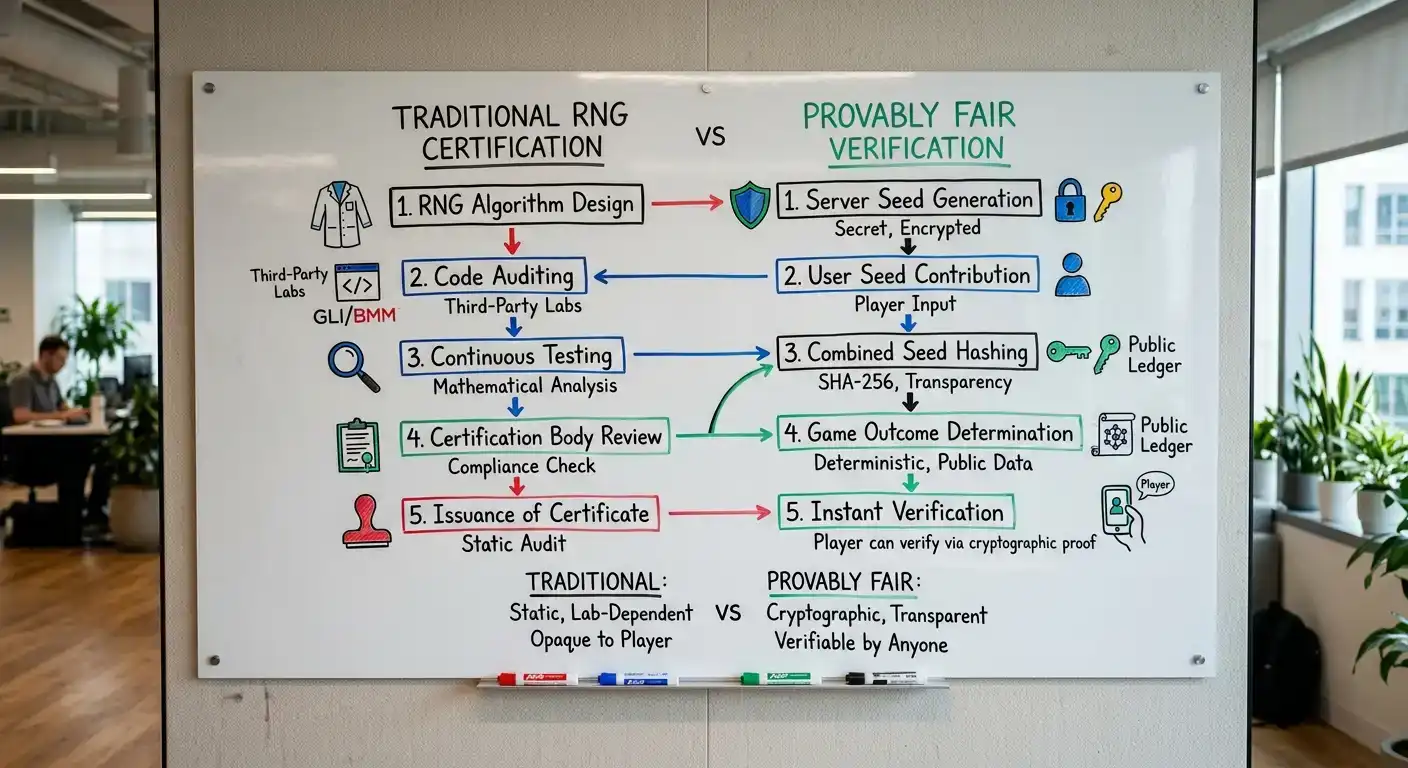
A provably fair game can be verified at the individual-outcome level but still carry an unfair RTP if the mathematical model underlying the game is biased. Conversely, an RNG-certified game provides statistical assurance but no mechanism for verifying any specific outcome. The ideal scenario — and one that BGaming and similar providers deliver — is a game that is both provably fair at the outcome level and RNG-certified at the statistical level.
For players at Britsino, the practical advice is to use provably fair verification as an additional trust layer on the games that support it, while relying on provider-level RNG certification for the remainder of the library. Neither system is perfect in isolation; together, they provide the most comprehensive fairness assurance currently available in online gambling.
Are all games at Britsino Casino provably fair?
No. Provably fair technology is available on a subset of games, primarily from crypto-native providers like BGaming. The majority of Britsino’s game library uses traditional RNG certification from independent testing laboratories. Look for a provably fair label or verification icon on individual games to identify which titles support cryptographic verification.
Do I need technical knowledge to verify a provably fair result?
No. The verification process involves copying seed values from the game interface and pasting them into a verification tool provided by the game provider or available from independent sources. The tool performs the calculation and tells you whether the result matches. You do not need to understand the underlying cryptography to use it.
Created by the ”Britsino Casino” editorial team.