
How to Verify RTP at Britsino Casino: Independent Checks You Can Run Yourself
 Available in GB

I played a slot for three weeks convinced it was running at 96.5% RTP because that is what the review site told me. Then I checked the game’s paytable directly — it showed 94.2%. The casino was using the lower-RTP variant, and nobody had told me. That 2.3 percentage-point difference meant I was losing money roughly 50% faster than I thought. It was not fraud, it was not a glitch — it was simply a configuration choice the operator made, and one I could have discovered in thirty seconds if I had known where to look.
RTP — return to player — is the single most important number in any casino game, yet most players never verify it independently. They trust the figure quoted on a blog, a review, or even the casino’s own marketing. At Britsino Casino, operating under a Curaçao licence without UKGC oversight, the responsibility for verification falls squarely on the player. Here is how to do it properly.
Table of Contents
- Why Advertised RTP and Actual RTP Diverge
- Checking the In-Game Paytable
- Cross-Referencing with Developer Documentation
- Understanding Variance Between Sessions and Long-Term RTP
- Third-Party Audit Certificates and Their Limitations
- Practical RTP Verification Workflow
- When the Numbers Should Change Your Behaviour
Why Advertised RTP and Actual RTP Diverge
A question that surprises most players: did you know that many slot games ship with multiple RTP settings? The developer creates one game engine and offers the operator a choice — typically between two and five RTP tiers. A popular Pragmatic Play slot might have variants at 96.50%, 95.50%, 94.50% and even 87.00%. All four versions look identical. Same graphics, same bonus rounds, same sound effects. The only difference is the mathematical model running underneath.
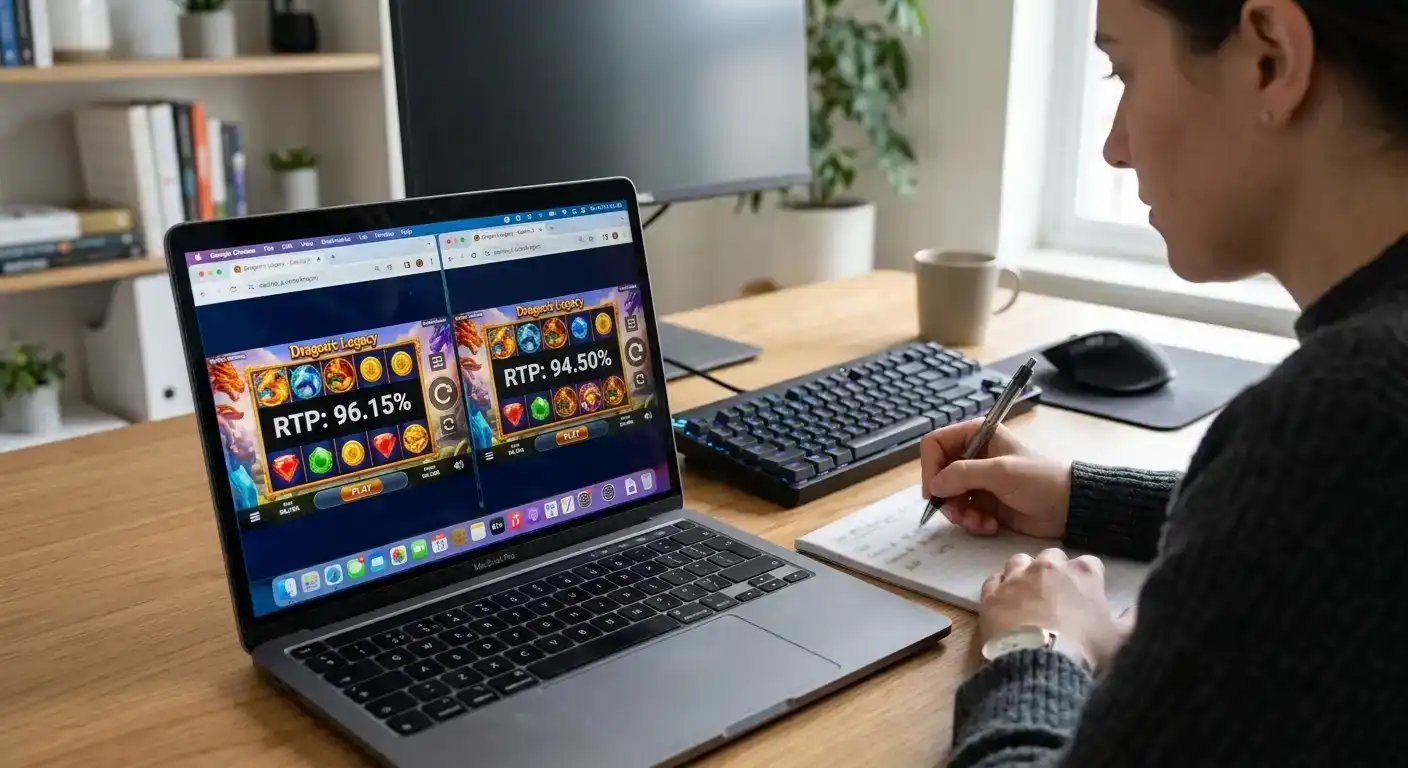
UKGC-regulated casinos are required to display the actual RTP of the version they deploy. Offshore platforms operating under Curaçao jurisdiction face no such obligation. This does not mean they are necessarily running low-RTP variants — many run the standard version — but it does mean you cannot assume the RTP quoted on a third-party review site matches what Britsino has configured. The review site tested the game at one operator; Britsino may have deployed a different variant.
According to industry analysis, approximately 60% of Curaçao-licensed operators deploy at least some games at reduced RTP settings compared to the maximum available version. The reduction typically ranges from 1 to 3 percentage points — enough to meaningfully affect your expected losses over any extended session but not dramatic enough to be obvious from casual play.
Checking the In-Game Paytable
The most reliable way to check a game’s actual RTP is the one most players ignore — the game itself. Every legitimately certified slot includes a paytable or information screen accessible through a menu icon, usually represented by a hamburger menu, an “i” symbol, or a question mark. Inside that screen, among the symbol values and payline diagrams, the game’s RTP is stated as a percentage.
I made a habit of checking this screen before placing my first bet on any new game. It takes ten seconds and has saved me from playing reduced-RTP variants on multiple occasions. The process is simple: open the game, find the info or paytable menu, scroll to the section labelled “Theoretical Return to Player” or similar phrasing, and note the percentage. If it matches the developer’s published maximum, you are playing the standard version. If it is lower, the operator has configured a reduced variant.
One caveat worth noting — some game UIs bury the RTP information several screens deep within the paytable, and a few older games list it in tiny text at the very bottom of the rules section. Persistence is required. If you cannot find the RTP in the paytable, that itself is useful information — it may indicate a game build that omits the figure, which warrants additional caution.
Cross-Referencing with Developer Documentation
Every major game provider publishes official RTP data for each title, usually in a game description or product sheet on their corporate website. This is your benchmark — the maximum RTP the game was designed to offer, before any operator configuration adjustments.
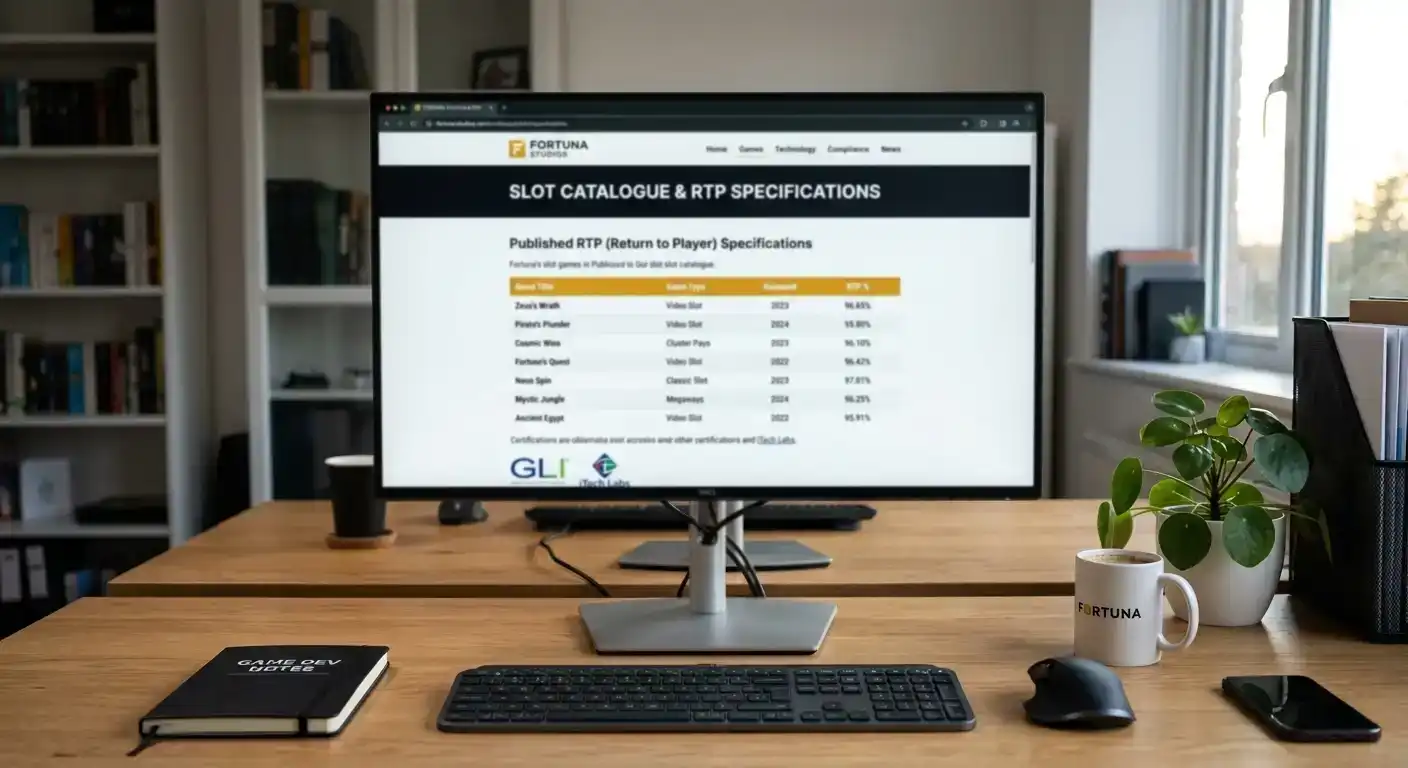
The verification process works by comparison. Check the in-game paytable to find the deployed RTP at Britsino. Then look up the same game on the provider’s official site — Pragmatic Play, NetEnt, Play’n GO and most other major studios list their games publicly with stated RTP ranges. If the Britsino paytable shows 96.50% and the provider’s sheet lists the maximum at 96.50%, you have confirmation. If the paytable shows 94.50% while the provider lists variants at 96.50% and 94.50%, you know the operator chose the lower tier.
This comparison takes about two minutes per game and gives you definitive information. The key is using the provider’s official documentation rather than third-party review sites, which often list only the highest available RTP without noting that multiple variants exist. As examined in the Britsino slots and RTP overview, the difference between RTP variants can translate to substantial differences in expected hourly loss.
Understanding Variance Between Sessions and Long-Term RTP
After my first month tracking my own results, I was convinced the casino had rigged the game. My actual return was 81% — far below the stated 96.5% RTP. Fifteen percentage points of “missing” return felt damning. Then I ran the maths on my sample size and realised I had played only 2,400 spins. At that volume, anything between 75% and 115% return is statistically unremarkable.
This is the trap that catches most players who attempt personal RTP verification through tracking their own results. RTP is a theoretical figure calculated across millions of simulated rounds. Your personal results will deviate from that figure — sometimes dramatically — across any session, week, or even month of play. Variance is not evidence of manipulation; it is the mathematical reality of random outcomes.
For a medium-volatility slot with 96% stated RTP, you would need approximately 10,000 to 50,000 spins before your personal results begin to converge toward the theoretical figure with any statistical reliability. Most recreational players never reach that threshold on a single game. This means your own tracking data is useful for bankroll management — knowing how much you have spent and won — but unreliable as evidence for or against the stated RTP.
The distinction matters because players who misinterpret short-term variance as RTP manipulation make poor decisions in both directions. They abandon fair games after a losing streak, and they continue playing unfair games during a lucky run. Verify RTP through the paytable and provider documentation, not through personal results.
Third-Party Audit Certificates and Their Limitations
UKGC-licensed casinos are required to have their games tested by approved testing houses — organisations like eCOGRA, iTech Labs, GLI and BMM Testlabs. These auditors verify that the game’s random number generator produces genuinely unpredictable outcomes and that the actual mathematical return matches the stated RTP. Audit results are often published as monthly certificates or seals displayed on the casino’s website.
At Curaçao-licensed platforms like Britsino, game testing requirements are less prescriptive. The games themselves are typically certified by the provider — Pragmatic Play, for instance, has its games tested by independent labs before releasing them — but the specific RTP variant deployed by each operator is not necessarily re-audited at the operator level. This is another reason why in-game paytable verification is essential: the game engine is certified, but the configuration is the operator’s choice.
If you find an eCOGRA or iTech Labs seal on an offshore casino’s website, it indicates some level of third-party oversight — but investigate what scope that audit covers. A seal certifying the RNG is different from a seal certifying the deployed RTP configuration. The former confirms randomness; the latter confirms the specific return percentage. Both matter, but they answer different questions.
Practical RTP Verification Workflow
After years of checking RTP across different platforms, I have settled on a five-step process that takes under three minutes and gives me confidence in the number before I commit real money.
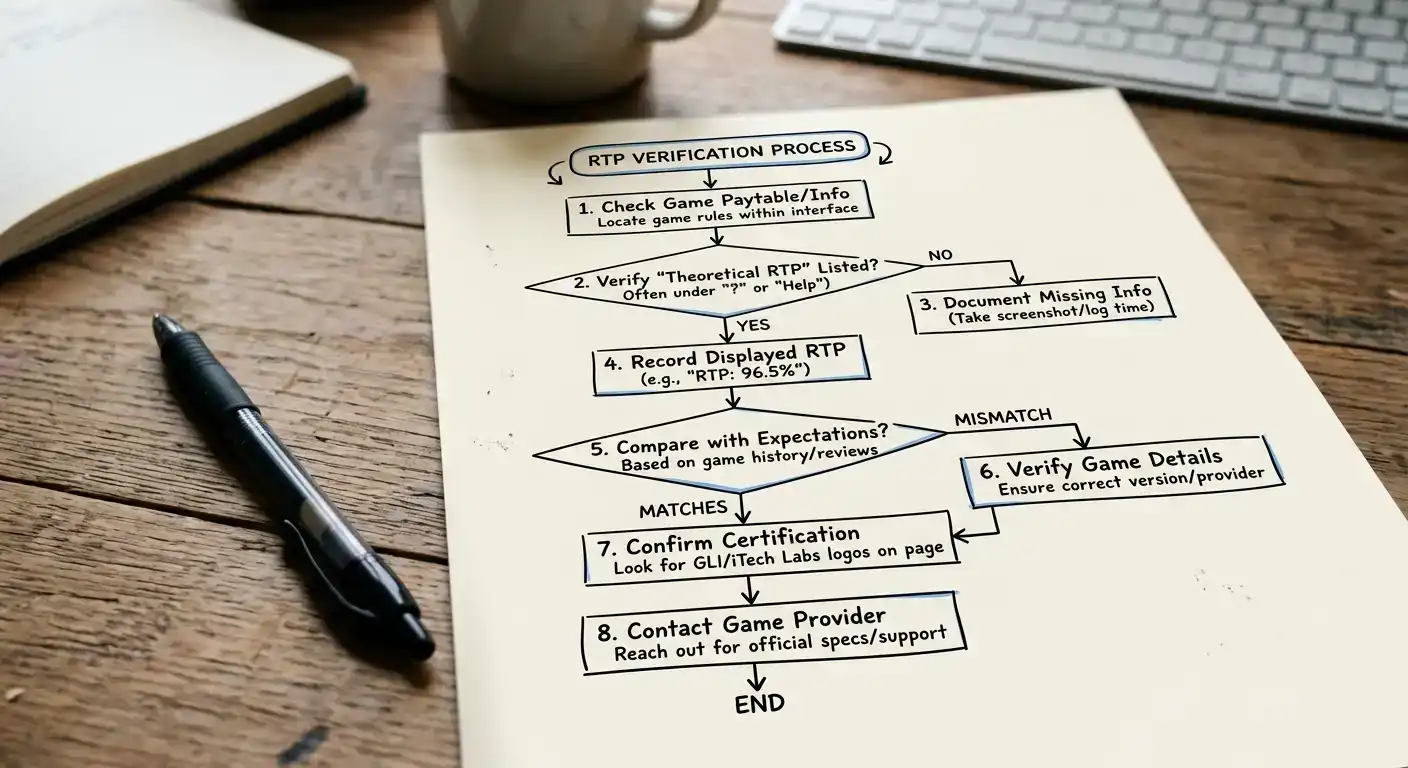
Open the game in demo mode if available — this lets you access the paytable without risking funds. Navigate to the information or rules screen and locate the RTP figure. Note it exactly, including any decimal places. Next, visit the game provider’s official website and find the same title in their game catalogue. Compare the two figures. If they match the provider’s maximum published RTP, proceed. If the deployed RTP is lower, decide whether the reduction is acceptable to you — a 0.5% reduction is different from a 3% reduction in practical impact.
Finally, check whether the game’s paytable specifies a fixed RTP or a range. Some games — particularly those with skill elements like video poker or those with progressive jackpots — display an RTP range rather than a single figure. The contribution to a progressive jackpot pool is typically funded by reducing the base game RTP, so a progressive slot showing 94.5% RTP is not necessarily a worse deal than a standard slot at 96% if the progressive pool adds meaningful expected value. The maths depends on the jackpot size relative to the contribution rate — a calculation beyond most casual sessions but worth understanding in principle.
When the Numbers Should Change Your Behaviour
Verification without action is just academic curiosity. The whole point of checking RTP is to make better decisions about where your money goes. The UK Gambling Commission’s 2025 annual report noted that British punters collectively generated £773 million in quarterly gross gambling yield from online slots alone — a figure that reflects the cumulative edge operators hold across millions of sessions. The size of that edge, game by game, is exactly what RTP verification reveals.
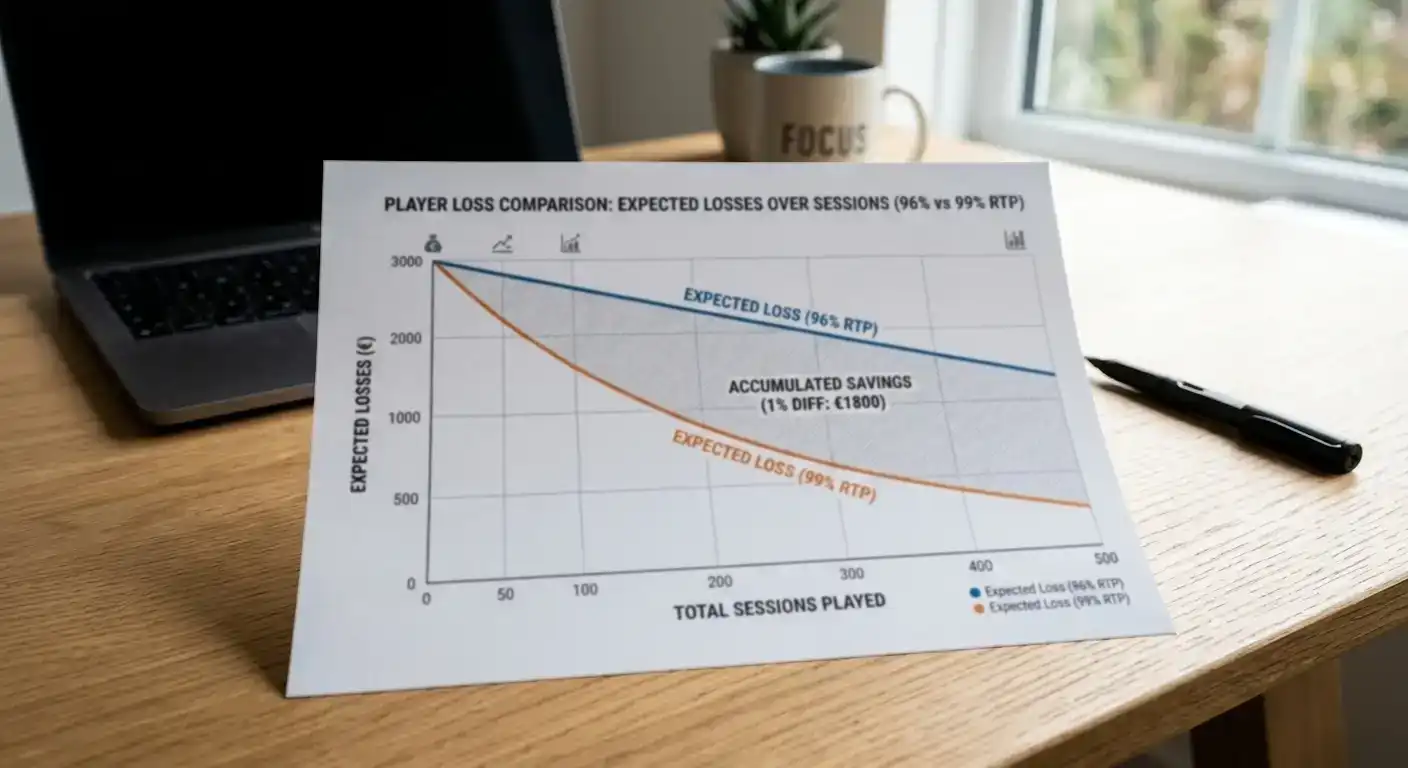
If a game at Britsino runs at 96.5% RTP, your expected loss is £3.50 per £100 wagered. If the same game runs at 94%, your expected loss jumps to £6 per £100 — a 71% increase in the cost of playing. Over a session of £500 total wagers, that is the difference between an expected loss of £17.50 and £30. Over a month of regular play, the gap compounds into meaningful money.
The action this data supports is straightforward: compare the RTP of the version deployed at Britsino against the maximum available. If the difference is small — under 1% — it is within the range most players would consider acceptable. If the difference exceeds 2%, consider whether the convenience of playing at this platform justifies the additional mathematical cost. That is not a judgement about the platform’s integrity — it is a personal financial calculation, no different from comparing interest rates on savings accounts or fuel prices between petrol stations.

Where can I find the actual RTP of a slot game at Britsino Casino?
Open the game and navigate to the paytable or information screen, usually accessible via a menu icon, ‘i’ button, or question mark symbol. Scroll through the rules section until you find ‘Theoretical Return to Player’ or ‘RTP’ followed by a percentage. This figure reflects the version actually deployed at Britsino, not necessarily the maximum available from the developer.
Can I trust my own win/loss tracking to verify RTP?
Personal results are unreliable for RTP verification because of variance. You would need 10,000 to 50,000 spins on a single game before your results begin to statistically converge toward the theoretical RTP. For verification, rely on the in-game paytable and cross-reference with the provider’s published documentation instead.
Do all slots at Britsino run at the same RTP as UKGC-licensed sites?
Not necessarily. Many game providers offer multiple RTP variants of the same title, and operators choose which version to deploy. UKGC-regulated casinos must disclose the active RTP, while Curaçao-licensed platforms like Britsino face no equivalent obligation. Always check the in-game paytable to confirm the deployed RTP before playing.
Published by the Britsino Casino team.