
Britsino Casino Slots and RTP: Provider List, Volatility Tiers, and How Return to Player Really Works
 Available in GB

Six thousand games is a number that sounds impressive until you ask what it actually means. Any catalogue of that size will contain a mix of genuinely well-designed slots, unremarkable filler titles, and games you will never open twice. The Britsino Casino slots library is no different, and the number itself tells you nothing about the quality, fairness, or expected returns of the games available.
What does tell you something is the data underneath. UK online slots generated £773 million in gross gambling yield during the first quarter of 2026 alone — a 12% increase year on year. That is not a niche category. It is the single largest revenue driver in British online gambling, built on billions of spins across millions of sessions. And at the centre of every one of those spins sits a number that most players have heard of but few genuinely understand: RTP, or Return to Player.
This article goes beyond listing games. I will explain how RTP actually works over realistic sample sizes, why volatility matters at least as much as the published return percentage, which game providers power Britsino’s library, and how the absence of UK stake limits changes the risk profile for players using this platform. If you are going to spin, you should know what you are spinning into.
Learn more about britsino casino on our main page.
Table of Contents
- Return to Player Explained: What 96% RTP Means Over 10,000 Spins
- Volatility Tiers: Low, Medium, and High — What Each Means for Your Session
- Game Providers at Britsino: Who Makes the Slots You Spin
- Live Dealer Games: Blackjack, Roulette, and Game Show Formats
- UK Stake Limits and How Britsino Operates Outside Them
Return to Player Explained: What 96% RTP Means Over 10,000 Spins
A colleague of mine once described RTP as “the most honest number in gambling that nobody reads correctly.” He was right. The industry standard RTP for online video slots sits at approximately 96%, and most players interpret that as: “For every £100 I put in, I get £96 back.” Technically true. Practically misleading.
RTP — Return to Player — is a theoretical statistical measure calculated over millions of simulated spins. It describes the proportion of total money wagered that a slot is programmed to return to players over its entire lifetime. A 96% RTP slot is not returning £96 out of every £100 to every player in every session. It is returning 96% of all money wagered by all players combined, averaged across a sample large enough to eliminate variance. For the individual player sitting down for a 30-minute session, anything can happen.
Think of it this way. If you flip a fair coin ten times, you might get eight heads and two tails. That does not mean the coin is biased. It means ten flips is not enough data to reveal the true 50/50 probability. Slots work on the same principle but with far more complex probability distributions. The Gambling Commission’s latest data shows the average UK online slot session lasts about 15 minutes and involves roughly 124 spins. Over 124 spins, the gap between theoretical RTP and actual results can be enormous. A player might lose 40% of their stake in one session and win 200% in the next. Neither result contradicts the published 96% figure — they are both normal short-term outcomes that the long-run average smooths out.
So when does RTP become meaningful? Generally, over 10,000 spins or more, the actual return starts converging toward the theoretical figure. For a player making 124 spins per session, that represents roughly 80 sessions — an enormous amount of play. Below that threshold, RTP is a weak predictor of individual outcomes, and treating it as a guarantee is a mathematical error.

There is also a less obvious dimension: the difference between online and land-based slot RTPs. Online video slots typically range from 92% to 98%, with the industry clustering around 96%. Land-based machines in physical casinos tend to sit lower, between 88% and 94%, reflecting higher operational costs that are passed to the player through a larger house edge. This gap is one of the genuine structural advantages of online play, though it does not change the fundamental dynamic — the house retains a mathematical edge regardless of format.
One more nuance that rarely gets discussed: operators can sometimes select from multiple RTP settings offered by the game provider. A slot might be available at 96.5%, 94.5%, or 92% RTP, and the operator chooses which version to deploy. UKGC-licensed operators are required to display the RTP in effect. Curaçao-licensed operators face no equivalent obligation. This means the RTP published on a game provider’s website may not match the RTP deployed at a specific casino. At Britsino, as at most offshore operators, there is no independent mechanism for a player to verify which RTP setting is active on a given slot. That information asymmetry is worth factoring into any assessment.
The financial significance of RTP differences compounds rapidly at higher wagering volumes. Consider two players who each wager £10,000 over a month. Player A chooses slots averaging 96% RTP; player B sticks with slots averaging 93% RTP. The expected cost for player A is £400. For player B, it is £700 — nearly double. Over a year of similar activity, that three-percentage-point gap translates to thousands of pounds in additional expected losses. RTP selection is not a minor optimisation. It is one of the highest-impact decisions a slot player makes, even if it feels like a dry statistic compared to choosing a theme or a bonus feature.
Volatility Tiers: Low, Medium, and High — What Each Means for Your Session
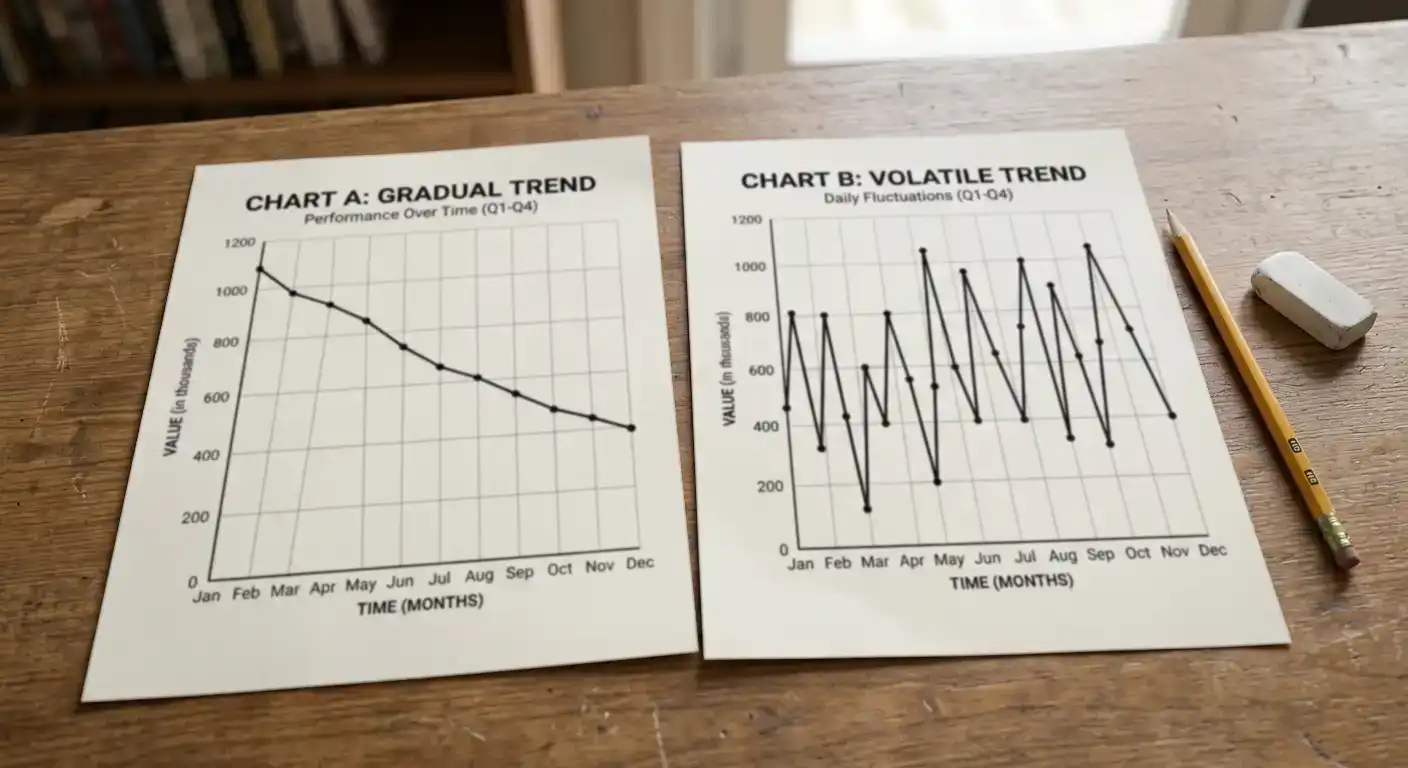
If RTP tells you how much the slot keeps over the long run, volatility tells you how it distributes the outcomes along the way. I have watched players fixate on a 97% RTP figure and then burn through their bankroll in twenty minutes because the game was high-volatility. They were technically playing a “high-return” slot. They just did not survive long enough for the return to materialise.
Volatility — sometimes called variance — describes the frequency and size of payouts. Low-volatility slots produce small wins frequently. Your balance fluctuates gently, sessions last longer, and the experience feels steady. High-volatility slots produce large wins rarely. Long stretches of losing spins are punctuated by occasional big payouts. Your balance can drop steeply before recovering — if it recovers at all within a given session.
Medium-volatility slots sit between the extremes and represent the largest category in most online libraries, including Britsino’s. They offer a mix of small and moderate payouts with occasional larger wins, and they are where most players settle once they understand the concept.
Gambling Commission data shows what volatility looks like in practice at the population level. The average online slot session in the UK dropped to 15 minutes in Q1 2026, down two minutes from the previous year. Average GGY per session fell from £4.01 to £3.82, and the number of spins per session decreased from 136 to 124. Sessions lasting more than one hour declined by 16% year on year. These aggregate shifts reflect both regulatory intervention — stake limits, mandatory session information — and the natural variance of play. But for an individual player, volatility is the primary driver of session length. A high-volatility slot can end your session in five minutes; a low-volatility slot can stretch the same bankroll across thirty.
Choosing between volatility tiers is not a matter of which is “better” — it is a matter of matching the game to your bankroll and your session expectations. If you have £20 and want to play for an hour, a high-volatility slot is a poor choice. The maths will end your session long before the hour is up in most cases. A low-volatility slot with a 96% RTP gives you the best chance of sustained play. Conversely, if you are comfortable with the possibility of losing your stake quickly in exchange for a shot at a larger single payout, high-volatility games deliver that specific risk profile.

Britsino’s library spans all three tiers. The platform’s game filters allow sorting by category — Megaways, Adventure, Mythology — but not directly by volatility level. Finding the volatility rating for a specific slot usually requires checking the game provider’s documentation or the paytable within the game itself, which is an extra step that many players skip entirely.
The interaction between volatility and RTP creates a matrix that few players consider. A high-volatility slot with a 97% RTP will feel very different from a low-volatility slot with the same 97% RTP. The first might eat through your bankroll in a brutal losing streak before delivering a large payout that you might not stick around to see. The second will bleed your balance slowly and steadily, returning small wins that extend your session but rarely produce a dramatic result. Both have the same long-run return. Both deliver fundamentally different player experiences. Understanding which combination matches your temperament and bankroll is more useful than chasing the highest RTP number in isolation.
Picking Volatility for Bonus Wagering vs. Cash Play
Volatility selection changes depending on whether you are playing with bonus funds or cash. The distinction matters because bonus wagering operates under different constraints — time limits, maximum bet caps, and wagering requirements — that interact with volatility in specific ways.

For bonus wagering, low-to-medium volatility is generally the more conservative choice. The wagering requirement demands a specific volume of bets, and you need your balance to survive long enough to complete that volume. High-volatility games carry a higher risk of depleting your bonus balance before you reach the wagering target, even if the expected value is theoretically the same. The variance can kill you before the maths saves you.
For cash play with no wagering obligations, volatility selection is a personal preference rather than a strategic calculation. If you want entertainment value and session length, low volatility delivers that. If you are comfortable with the risk and want the possibility of a large payout, high volatility is the appropriate choice. Neither is inherently better — the optimal volatility depends on your bankroll, your risk tolerance, and how long you want your session to last.
One nuance worth flagging: some operators configure different RTP variants for the same slot, and the lower-RTP version sometimes coincides with a different volatility profile. If Britsino offers a slot at 94 per cent RTP instead of the provider’s default 96 per cent, the payout distribution may shift in ways that affect both expected return and session experience. Checking the in-game RTP disclosure, not just the provider’s published figure, is a habit worth developing.
Where can I check a slot’s volatility at Britsino?
Volatility information is typically found in the game’s info or paytable section, accessible via a menu icon within the game interface. Some titles display a volatility rating in the lobby thumbnail. The level of detail varies by provider — some use descriptive labels (low, medium, high) while others provide a numerical scale.
Does volatility affect RTP?
No. Volatility and RTP are independent metrics. Two slots can have the same RTP of 96 per cent but very different volatility levels. RTP describes the percentage of wagered money returned to players over a large sample. Volatility describes how that return is distributed — frequently in small amounts or infrequently in large amounts.
Volatility and Bankroll: The Relationship Nobody Explains
Here is the calculation most slot guides skip: how many spins can your bankroll survive at a given volatility level? The answer determines whether you are likely to experience the game’s full payout distribution or run out of funds during a dry spell.
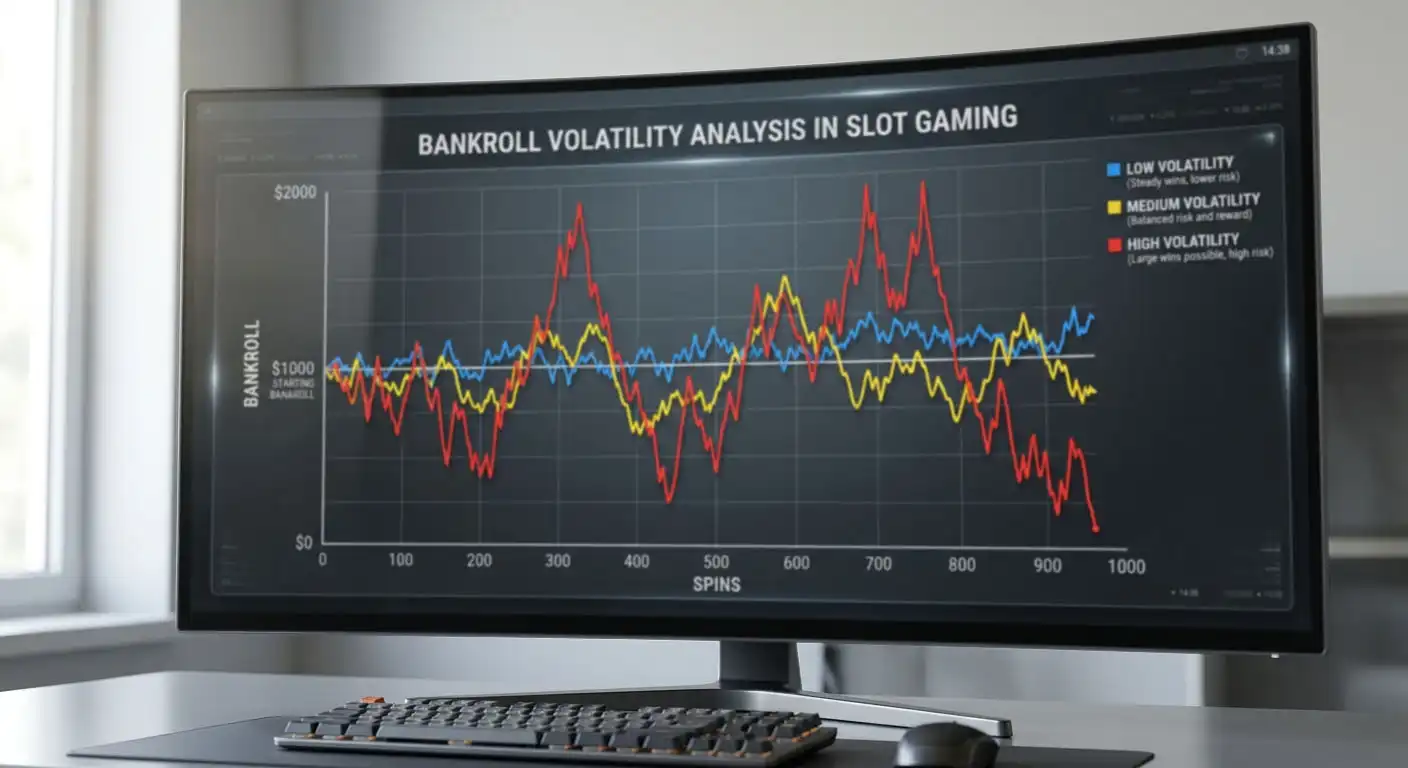
A common guideline among serious slot players is to bring at least 200 to 300 spins’ worth of bankroll for a high-volatility session. If you are betting one pound per spin, that means a two-hundred to three-hundred pound budget specifically for that session. At low volatility, 100 to 150 spins’ worth is usually sufficient because the payout frequency keeps your balance replenished.
This relationship between volatility and bankroll is why I always recommend checking a game’s volatility rating before selecting a bet size, not after. If you have fifty pounds to play with and choose a high-volatility slot at one pound per spin, you have 50 spins of runway — barely enough for the game to warm up. The same fifty pounds at twenty pence per spin gives you 250 spins, which is a statistically more meaningful sample. The game does not care about your budget, but your budget should care about the game’s volatility.
Britsino’s game lobby provides volatility information for many titles, though the presentation varies by provider. Some display a volatility meter (low/medium/high), others include a numerical rating, and some list it in the game’s info or paytable section. The slot RTP directory includes volatility classifications where available, which can save you the time of opening each game individually to find the information.
Game Providers at Britsino: Who Makes the Slots You Spin
Behind every slot on a casino’s platform sits a game provider — the studio that designed, programmed, and certified the game. I spend a meaningful portion of my audits verifying which providers power a casino’s library, because the provider’s own regulatory status tells you something the casino’s marketing page never will: whether the games were tested by an independent lab before being deployed.
Britsino lists over 50 game providers. The headline names include Pragmatic Play, one of the highest-output studios in the industry, known for titles spanning every volatility tier and a dominant presence in both slot and live dealer categories. BGaming is another prominent provider in the library, recognised for crypto-native game design and provably fair mechanics on certain titles. Evolution powers the live dealer section (covered below) and has expanded into game-show-style formats that blur the line between casino and entertainment broadcast.
Beyond the tier-one studios, the library includes smaller providers — boutique studios that release a handful of titles per year rather than dozens. These niche providers sometimes offer higher-RTP slots than their larger competitors, partly because they compete on return rates to attract player attention in crowded libraries. However, they also tend to have fewer independent audits of their random number generators, and their games may not carry certifications from labs like GLI, BMM Testlabs, or iTech Labs that the major providers routinely obtain.

The provider’s licensing status matters independently of the casino’s own licence. A game from Pragmatic Play, which holds licences in multiple jurisdictions including the UKGC, carries an implicit quality assurance that the game’s RNG has been tested and the published RTP verified by an approved testing house. A game from an unlicensed or lightly regulated provider does not carry the same assurance. When browsing Britsino’s library, checking which provider made a game — not just its theme or bonus features — is a useful filter for assessing trustworthiness at the individual title level.
The library is organised by category rather than by provider, which means players typically discover games through thematic filters (Megaways, Mythology, Adventure, Fruit) rather than by seeking out a specific studio. This is standard across the industry, but it does mean a player actively looking for games from a particular provider will need to use the search function or browse more extensively than the category filters alone allow.
Provider Diversification Beyond Evolution
Evolution’s dominance in Britsino’s live dealer section is not unusual — the company holds the largest market share in live casino globally — but relying on a single provider creates a monoculture that limits variety. Britsino supplements Evolution’s catalogue with tables from secondary providers, which introduces alternative studio environments, different dealer styles, and sometimes more favourable table limits for specific player segments.
Pragmatic Play’s live casino division, for example, offers blackjack and roulette tables that run from studios with a different visual aesthetic than Evolution’s. The game rules are functionally identical, but the atmosphere, dealer presentation, and interface design differ enough that players who find one provider’s style monotonous can switch to another without leaving Britsino’s lobby. Ivan Montik, founder of SOFTSWISS, observed that the crucial regulatory question for the industry is not whether regulation expands, but what form it takes — and for live casino providers, multi-jurisdictional licensing has become the norm precisely because their content is distributed across hundreds of operator platforms simultaneously.
The practical implication for players is that not all tables at Britsino are created equal. Different providers may offer different bet limits, different game variants, and different streaming quality. Exploring the full live lobby rather than defaulting to the first table you see is worth the few minutes it takes.
Which live dealer providers are available at Britsino Casino?
Britsino’s live dealer section is primarily powered by Evolution, the largest live casino provider globally. Additional tables from secondary providers such as Pragmatic Play Live are also available. The specific provider lineup can change as new partnerships are established.
What are the minimum bet limits for live dealer games at Britsino?
Minimum bets vary by game type and table. Standard blackjack tables typically start at one to five pounds per hand. Roulette minimums begin at 0.20 to one pound for outside bets. VIP tables have higher minimums, typically twenty-five pounds or more. Check the table details in the live lobby for current limits.
Live Dealer Games: Blackjack, Roulette, and Game Show Formats
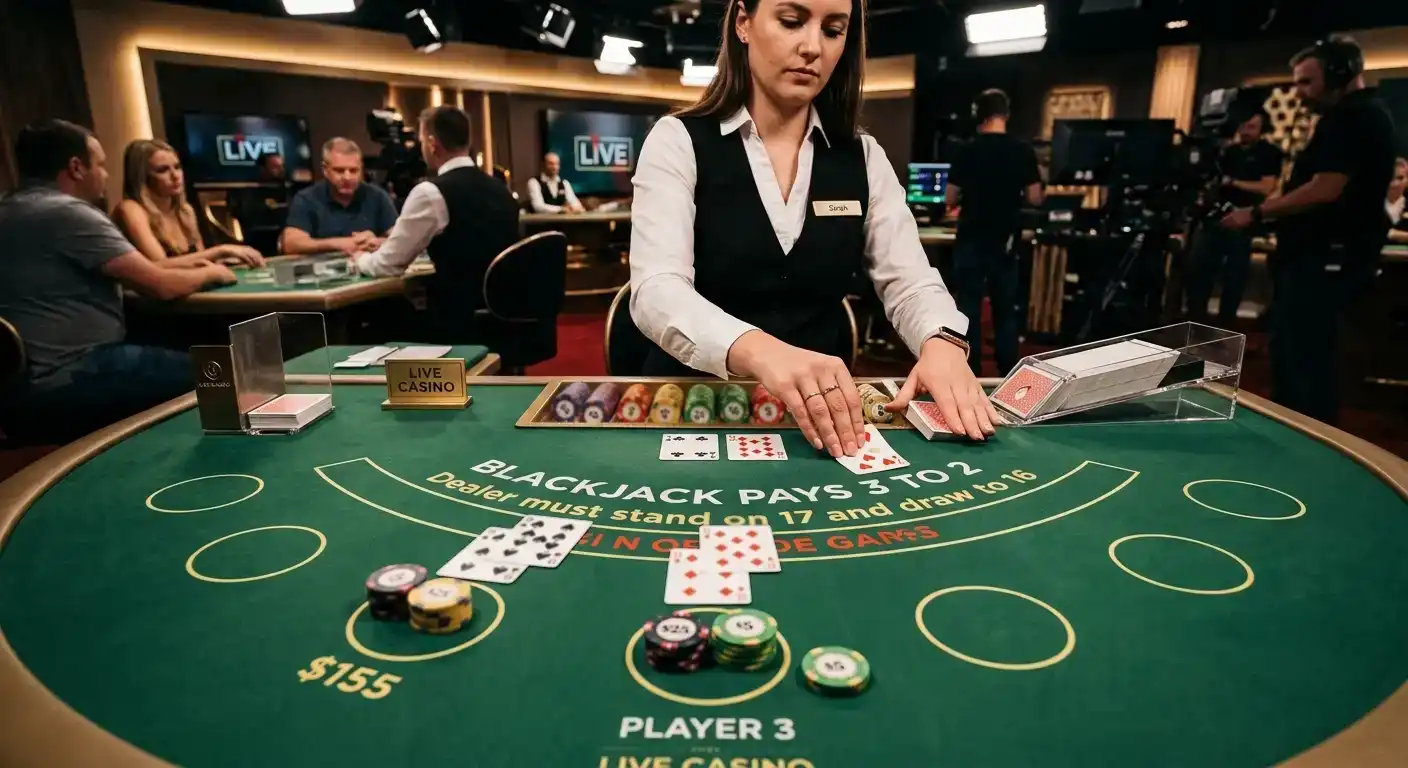
There is something qualitatively different about sitting at a live dealer table versus spinning a slot. The randomness is visible — you watch the dealer shuffle, deal, and spin in real time. That transparency is the product’s core appeal, and it explains why live casino has grown into a significant revenue segment alongside slots.
Britsino’s live dealer section is powered primarily by Evolution and Ezugi. Evolution dominates the premium end with high-definition streams, professional dealers, and a range extending beyond traditional table games into game-show formats like Crazy Time, Monopoly Live, and Lightning Roulette. Ezugi covers a complementary range of classic tables, often at lower minimum stake levels, making the live section accessible to players who do not want to commit to the higher minimums associated with Evolution’s flagship tables.
The available game types include blackjack (multiple table variants with different rule sets and side bets), roulette (European, French, and speciality lightning or speed variants), baccarat (standard and speed), and the game-show category, which offers a hybrid of RNG and live-presenter mechanics. Betting limits vary by table, with some accepting stakes as low as £0.50 on roulette and others requiring minimums of £25 or more at VIP-branded tables.
One important distinction for UK players: live dealer games at UKGC-licensed casinos are subject to the same operator obligations as slots — responsible gambling tools, complaint resolution pathways, and financial audits. At a Curaçao-licensed operator, the live games themselves are often provided by studios (like Evolution) that hold UKGC licences for their B2B operations, but the casino acting as the retail interface does not carry those same obligations. The game stream may be identical. The regulatory wrapper around the player’s account is not.
Latency and stream quality depend on the player’s internet connection and device. Mobile live dealer performance has improved substantially, but a stable broadband or strong 4G/5G connection remains essential for uninterrupted play. Lag during a live hand can result in missed betting windows, which the dealer cannot pause for individual players.
It is also worth noting that live dealer games contribute differently to bonus wagering requirements than slots. At most operators, including Britsino, live table game wagers count at a fraction of their face value toward wagering targets — typically 10% or less. A £100 bet on live blackjack might count as only £10 toward a wagering requirement, meaning a player relying solely on live tables would need to wager ten times more than a slots player to clear the same target. This game weighting effectively discourages players from using live dealer games during active bonus play.
Table Limits and Stake Range Flexibility
Table limits define who a live casino is designed for, and Britsino’s range covers both recreational players and higher-stakes gamblers. Standard blackjack tables typically start at a minimum of one to five pounds per hand, with maximums ranging from one thousand to five thousand pounds depending on the table. VIP tables push the minimum higher — twenty-five or fifty pounds per hand — with maximums that can reach ten thousand pounds or more.

Roulette minimums are generally lower, starting at 0.20 to one pound for outside bets. Inside bets have their own minimum, usually in the same range. Maximum bets on straight-up numbers vary by table but can reach several hundred pounds, while outside bets (red/black, odd/even) typically cap at a few thousand. The disparity between inside and outside maximums reflects the different payout ratios and risk profiles of each bet type.
For context, the UK Gambling Commission data shows online casino GGY reaching seven hundred and seventy-three million pounds in a single quarter during early 2026. Live dealer games contribute a meaningful portion of that revenue, and the stake ranges at operators like Britsino are calibrated to capture a wide slice of the player base — from casual evening sessions to serious table-game enthusiasts.
Stream Quality and Technical Performance
During my last extended live dealer test at Britsino, I played for three sessions totalling about four hours across different times of day and on different devices. The stream quality was consistently high on desktop over a 50 Mbps fibre connection — full HD resolution, no visible compression artefacts, and smooth motion tracking of the dealer’s hands and the ball on the roulette wheel.
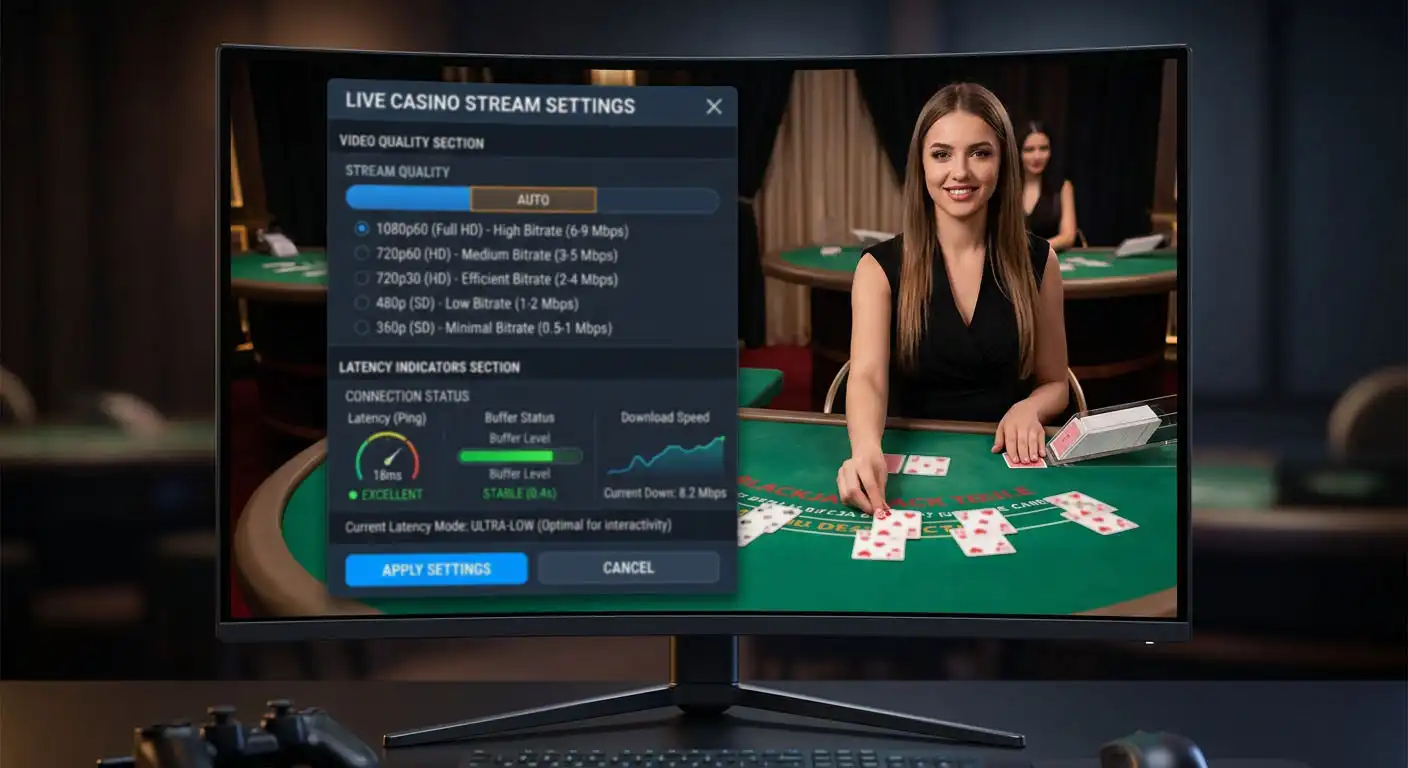

On mobile, performance was more variable. Over Wi-Fi, the stream maintained near-desktop quality on my iPhone, though the smaller screen made the betting interface feel cramped during blackjack. The mobile experience analysis covers this in detail, but the short version is that landscape orientation is essential for live dealer games on phones. On 4G, I experienced two brief buffering episodes during an evening session — each lasting about three seconds — which I attribute to network congestion rather than anything on the operator’s end. The stream never dropped entirely.
Latency is the technical metric that matters most in live dealer games because it affects your ability to place bets within the available window. I measured roughly 1.5 seconds of latency between the dealer’s actions and what appeared on my screen, which is within the normal range for live casino streams. The betting window — the period during which you can place or modify bets before the round closes — comfortably accommodates this delay in all game types I tested.

Audio quality is often overlooked in live dealer reviews, but it matters for immersion and for understanding the dealer’s announcements. Britsino’s Evolution-powered tables had clear audio with minimal background noise from the studio floor. Some operators run live tables with generic background music layered over the dealer’s voice, which I find distracting — Britsino avoids this.
UK Stake Limits and How Britsino Operates Outside Them
In April 2025, the UK Gambling Commission imposed a £5 maximum stake on online slots for players aged 25 and over. In May 2025, an even stricter cap of £2 took effect for players aged 18 to 24. These limits were the product of years of lobbying, consultation, and data analysis demonstrating that higher stakes correlated with longer sessions, larger losses, and elevated rates of problem gambling among younger demographics.
Britsino operates outside UKGC jurisdiction and is not bound by these limits. A player at Britsino can stake £10, £50, or £100 per spin on a slot — amounts that would be impossible at a UKGC-licensed casino under the current rules. This is one of the most consequential practical differences between regulated and offshore play, and it is worth understanding why the limits were introduced in the first place.
Tim Miller, Executive Director at the Gambling Commission, addressed misconceptions about the Commission’s approach to financial risk assessments and player protections, noting that much of the recent commentary had been ill-informed or inaccurate. The stake limits were not arbitrary. They were grounded in session data showing that uncapped stakes led to measurably worse outcomes for players, particularly younger ones. The limits exist to slow the rate of loss per unit time, giving the player more sessions for the same bankroll and more opportunities to make conscious decisions about continued play.
Without those limits, a Britsino session can run hotter in both directions. A high-volatility slot at £50 per spin can deplete a £500 bankroll in ten spins if the variance runs cold. It can also produce a four-figure win in a single bonus round. The psychological intensity of that swing is part of the appeal for some players — and part of the risk profile that the UKGC concluded warranted regulatory intervention.

The absence of stake limits also interacts with the wagering dynamics discussed in the bonus guide. Higher stakes clear wagering requirements faster, but they also increase the rate at which the house edge erodes your bankroll. A player wagering at £50 per spin clears a £6,000 requirement in 120 spins — but the expected loss at 96% RTP over those 120 spins is £240, compared to £24 if wagering at £5 per spin over 1,200 spins. The maths reward patience, not aggression.
You may also find Britsino Casino VIP Programme: Loyalty Tiers, Cashback Rates, and Tournament Access interesting.
For any player accustomed to the guardrails of UKGC-regulated platforms, the absence of stake limits at Britsino is the single largest behavioural difference they will encounter. It is also the one most likely to accelerate losses if not managed consciously.
What is the highest RTP slot available at Britsino Casino?
The highest RTP slots in the library typically come from providers like BGaming and Pragmatic Play, with published RTPs reaching 97% or above on select titles. However, the deployed RTP at any specific casino may differ from the provider’s published maximum because operators can sometimes select from multiple RTP settings. There is no independent verification mechanism at Britsino to confirm which setting is active.
Can I verify the RTP of a Britsino Casino slot independently?
The most reliable method is to check the game provider’s official documentation, which lists the RTP range for each title. Some slots also display the RTP in their in-game paytable or help section. However, verifying whether the casino has deployed the same RTP setting that the provider advertises is not possible without access to the operator’s back-end configuration, which is not available to players.
Are Britsino Casino live dealer games streamed in real time?
Yes. Live dealer games from providers like Evolution and Ezugi are streamed from physical studios in real time. The dealer, cards, and wheel are all live. Results are determined by the physical action on camera, not by a random number generator, though some game-show formats incorporate RNG elements alongside the live presenter.
Does Britsino Casino offer demo mode for slots?
Many slots in the library are available in demo or free-play mode, allowing players to test a game without wagering real money. Demo mode uses the same game mechanics and RTP settings as real-money play but with virtual credits. Not every title supports demo mode — some providers or specific games restrict it to registered and logged-in players only.
Written by the editors at Britsino Casino.